
Overview
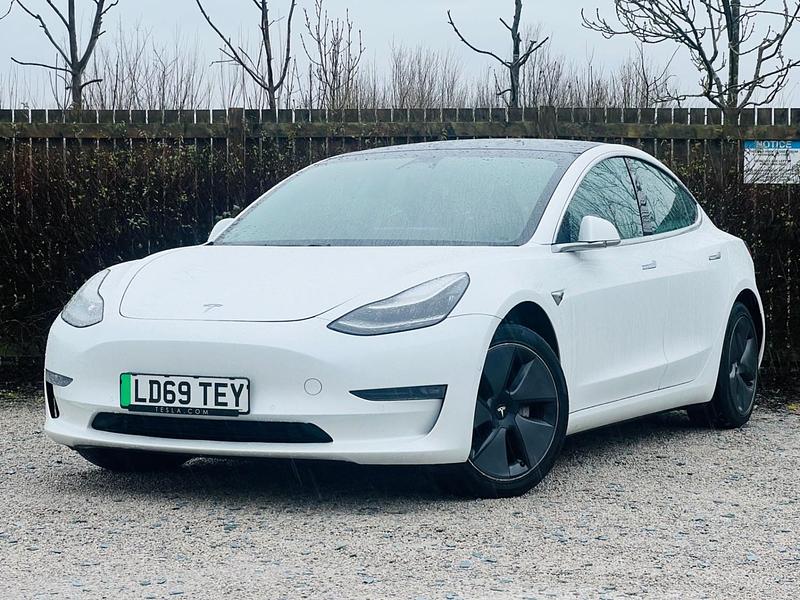
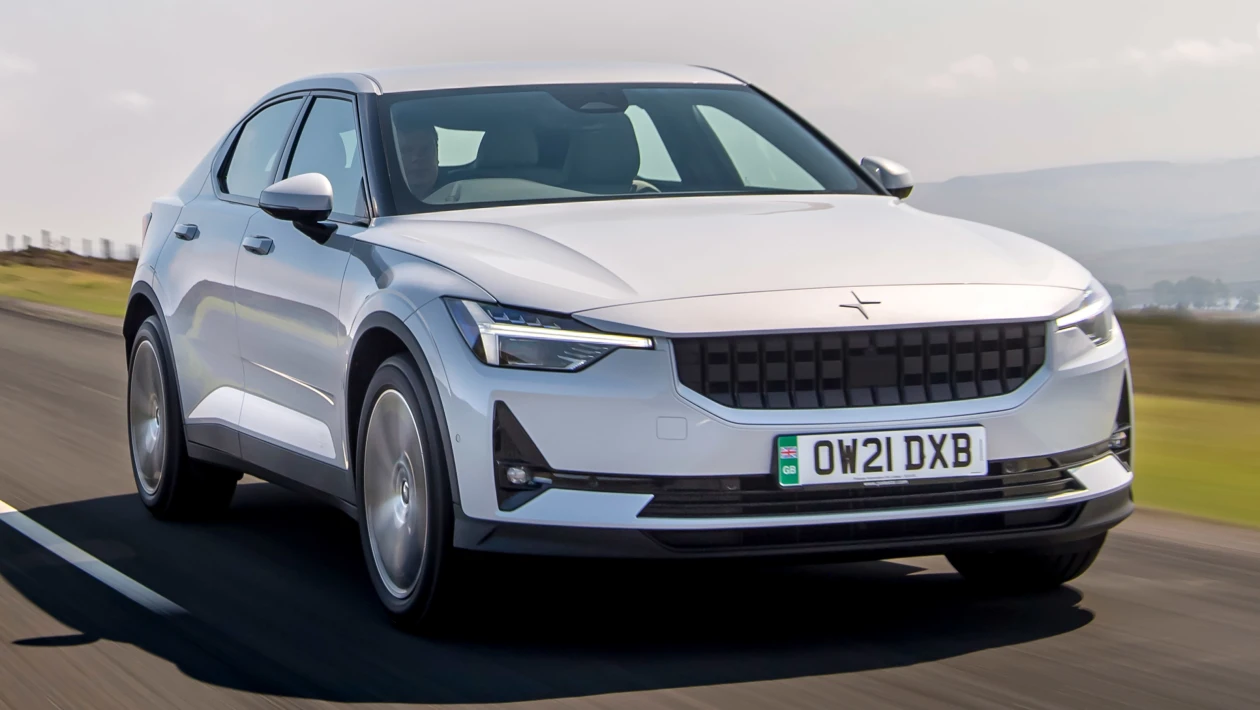
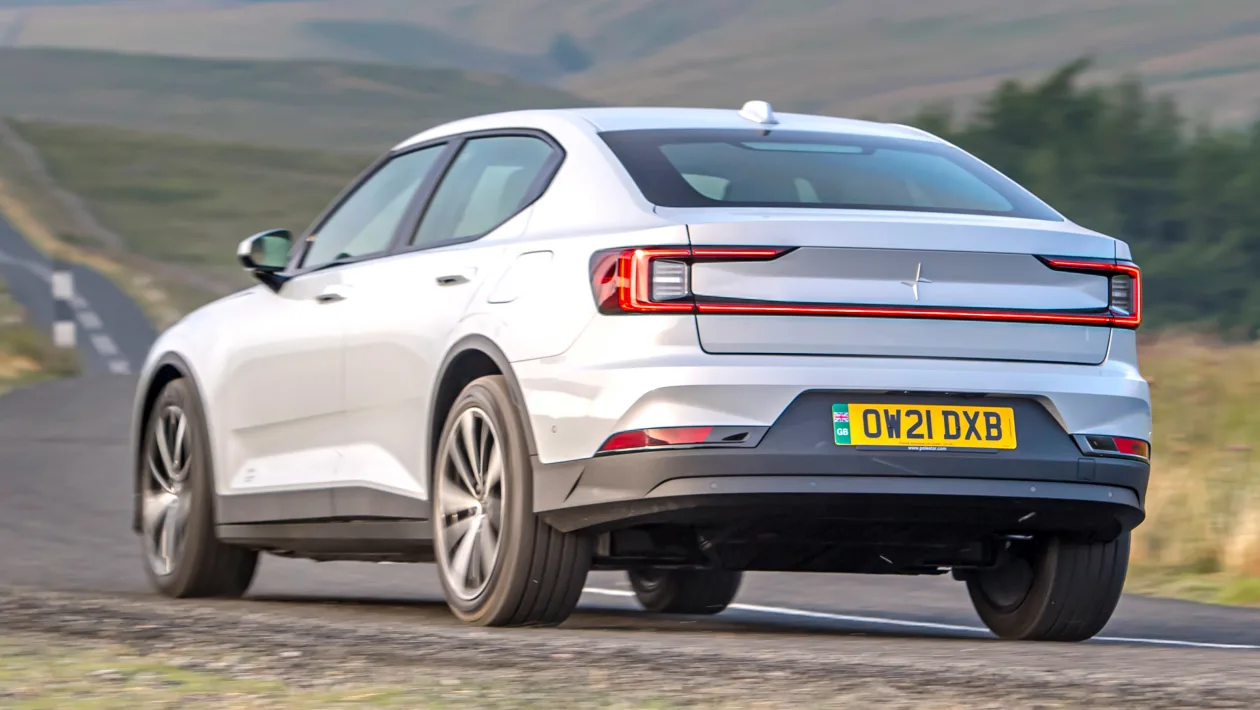
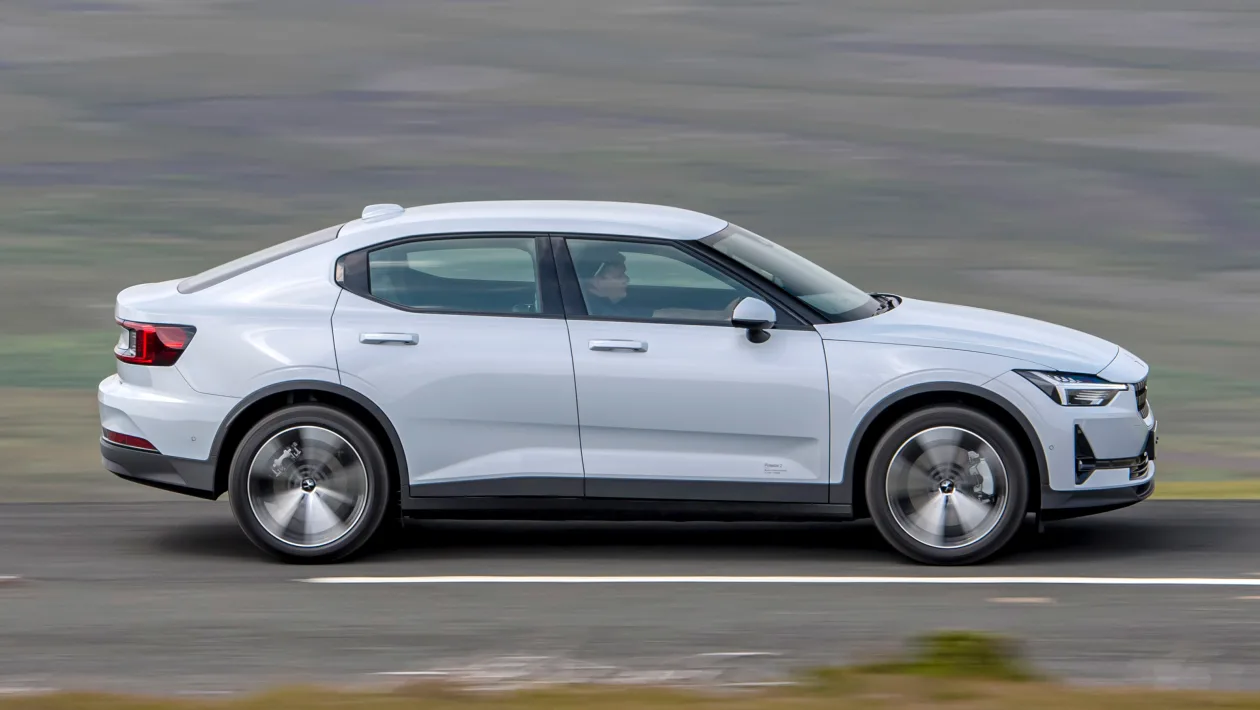
The Polestar 2 was designed as a direct Tesla Model 3 competitor. It offers Scandinavian premium quality with excellent Google-based technology and genuinely engaging driving dynamics.
Model variants:
| Version | Battery | Range (WLTP) | Power | 0-62mph |
|---|---|---|---|---|
| Standard Range Single Motor | 69kWh | 297 miles | 220hp | 7.4s |
| Long Range Single Motor | 78kWh | 368 miles | 231hp | 7.4s |
| Long Range Dual Motor | 78kWh | 298 miles | 408hp | 4.7s |
| Performance Pack | 78kWh | Various | 469hp | 4.4s |
Key changes:
| Year | Changes |
|---|---|
| 2020 | UK launch (Dual Motor only) |
| 2021 | Single Motor options arrive |
| 2022 | Range improvements, efficiency updates |
| 2023 | Minor updates |
The model evolved significantly — early cars were Dual Motor only with modest range. Later Single Motor versions offer better efficiency.
Performance & Drive
In town
The Polestar 2 is easy to drive in urban environments. The steering is accurate, visibility is reasonable, and the instant torque helps in traffic.
On the motorway
Refined and comfortable. The Polestar 2 cruises quietly with good stability. Later Long Range versions offer genuine motorway-friendly range.
On a twisty road
This is where the Polestar 2 differentiates itself. It's genuinely engaging to drive — the steering has weight and feedback, body control is tight, and it feels lighter than its 2-tonne weight.
The optional Performance Pack (Öhlins dampers, Brembo brakes) transforms the car into a proper driver's machine. Even without it, the Polestar 2 is more fun than most EVs.
Space & Practicality
Front seats
The seats divide opinion — firm and supportive, but some find them too hard for long journeys. The interior quality is excellent with premium materials throughout.
Rear seats
Adequate but the fastback roofline limits headroom. Tall passengers will feel cramped. Legroom is acceptable.
| Measurement | Space |
|---|---|
| Rear legroom | Adequate |
| Rear headroom | Compromised (6ft+ passengers tight) |
| Rear width | 2-3 adults |
Boot space
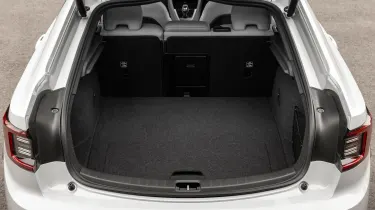
At 405 litres (plus 41 litres frunk), storage is practical. The hatchback opening is useful, though the boot floor is high.
| Configuration | Capacity |
|---|---|
| Rear boot | 405 litres |
| Frunk | 41 litres |
| Seats folded | ~1,095 litres |
Interior & Tech
Interior quality
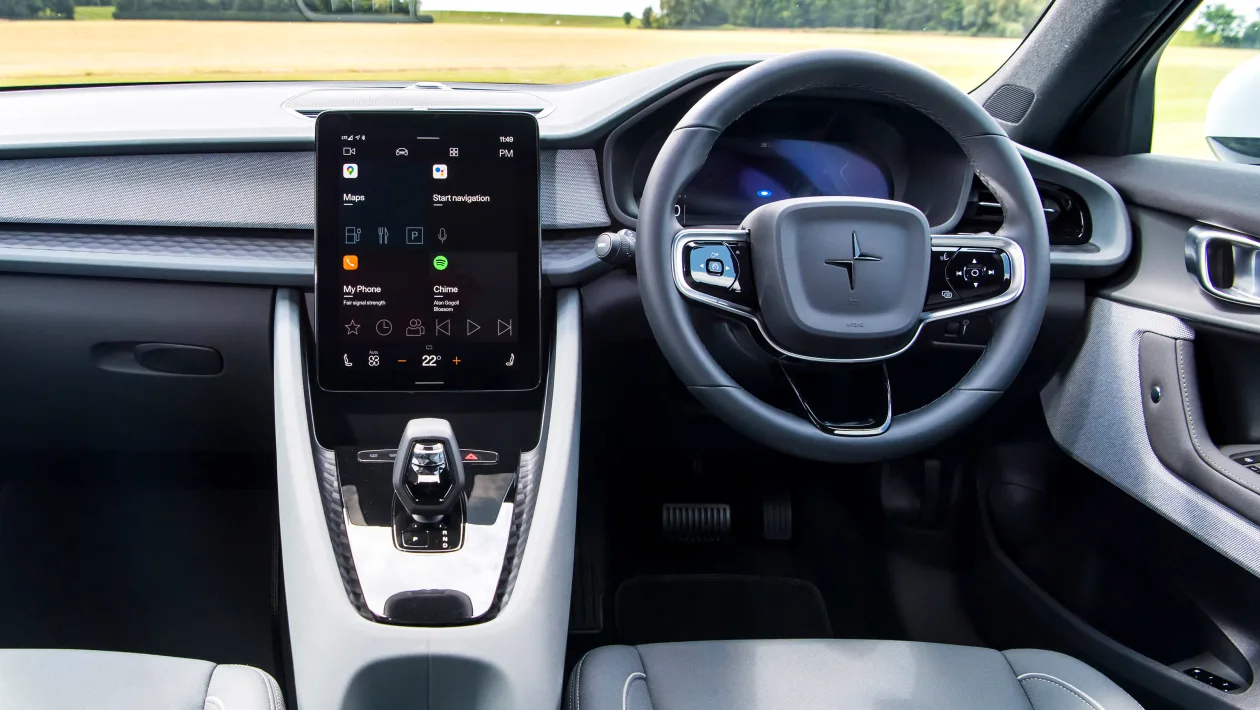
Excellent. The Scandinavian design is minimalist but premium. Materials are high-quality, and the build is solid. The vegan interior option uses sustainable materials without compromising quality.
Google infotainment
| Feature | Availability |
|---|---|
| Google Maps | Built-in, excellent |
| Google Assistant | Voice control |
| Apple CarPlay | Standard |
| Over-the-air updates | Standard |
The Google system is the same as the XC40 Recharge — intuitive, responsive, and well-integrated with charging networks.
Physical controls
Polestar retained key physical controls — climate buttons, volume dial, and a gear selector. Daily usability is much better than full-touchscreen rivals.
Range & Charging
Real-world range
| Version | WLTP | Real-world (summer) | Real-world (winter) |
|---|---|---|---|
| Standard Range SM | 297 miles | 230-260 miles | 180-220 miles |
| Long Range SM | 368 miles | 280-320 miles | 220-270 miles |
| Long Range DM | 298 miles | 230-260 miles | 180-220 miles |
Early Dual Motor cars (2020) had more limited range — approximately 260-270 miles WLTP.
DC rapid charging
| Version | Max Speed | 10-80% Time |
|---|---|---|
| Standard Range | 130kW | ~35 mins |
| Long Range | 155-205kW | ~30 mins |
Later Long Range versions support faster charging.
Reliability & Common Problems
Overall reliability
Generally good, though some early cars had issues.
Common issues
| Issue | Severity |
|---|---|
| 12V battery | Medium |
| Infotainment glitches | Low — updates resolved |
| Charging inconsistencies | Low |
| TCAM module | Medium — recall addressed |
Warranty
| Coverage | Duration |
|---|---|
| Vehicle | 3 years / 60,000 miles |
| Battery | 8 years / 100,000 miles |
What to Look For When Buying
Before viewing
- Identify model year — Early vs later specs differ significantly
- Check battery/motor configuration — Range varies widely
- Verify Performance Pack — If fitted, check Öhlins/Brembo condition
- Service history — Polestar Space visits preferred
During inspection
| Check | What to Look For |
|---|---|
| Seat condition | Firm seats show wear differently |
| Charging | Both AC and DC |
| Software version | Should be current |
| Tyres | High-powered versions wear fronts quickly |
Test drive focus
- Driving dynamics (the Polestar's strength)
- Seat comfort over distance
- All drive modes
Used Price Guide
Current market prices (2026)
| Year | Version | Mileage | Price Range |
|---|---|---|---|
| 2020 | Dual Motor | 40-60,000 | £24,000 - £32,000 |
| 2021 | Long Range SM | 30-50,000 | £26,000 - £34,000 |
| 2022 | Long Range SM | 20-40,000 | £30,000 - £38,000 |
| 2022 | Long Range DM | 20-40,000 | £34,000 - £42,000 |
| 2023 | Long Range SM | 10-30,000 | £34,000 - £42,000 |
Best value
A Long Range Single Motor offers the best balance — maximum range and efficiency at a reasonable price.
The Verdict
The bottom line
The Polestar 2 (2020-2023) is the premium Tesla Model 3 alternative. It offers better build quality, more engaging driving dynamics, and excellent Google-based technology.
Later Long Range versions address early range concerns. The driving experience remains the car's standout feature.
For those wanting Tesla-rivalling capability with Scandinavian premium quality, the Polestar 2 delivers.
| Rating | Score |
|---|---|
| Value for money | 7/10 |
| Real-world range | 8/10 (Long Range) |
| Charging convenience | 8/10 |
| Reliability | 7/10 |
| Practicality | 7/10 |
| Overall | 8/10 |