
Overview
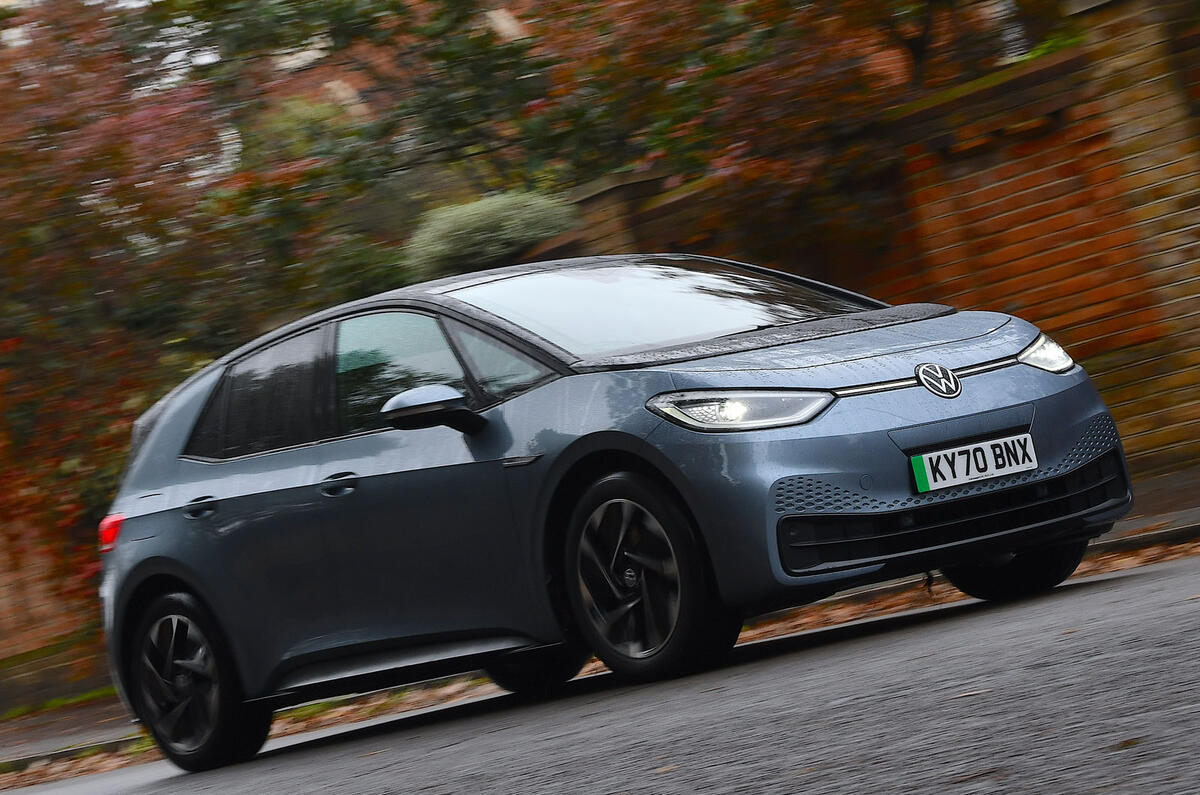
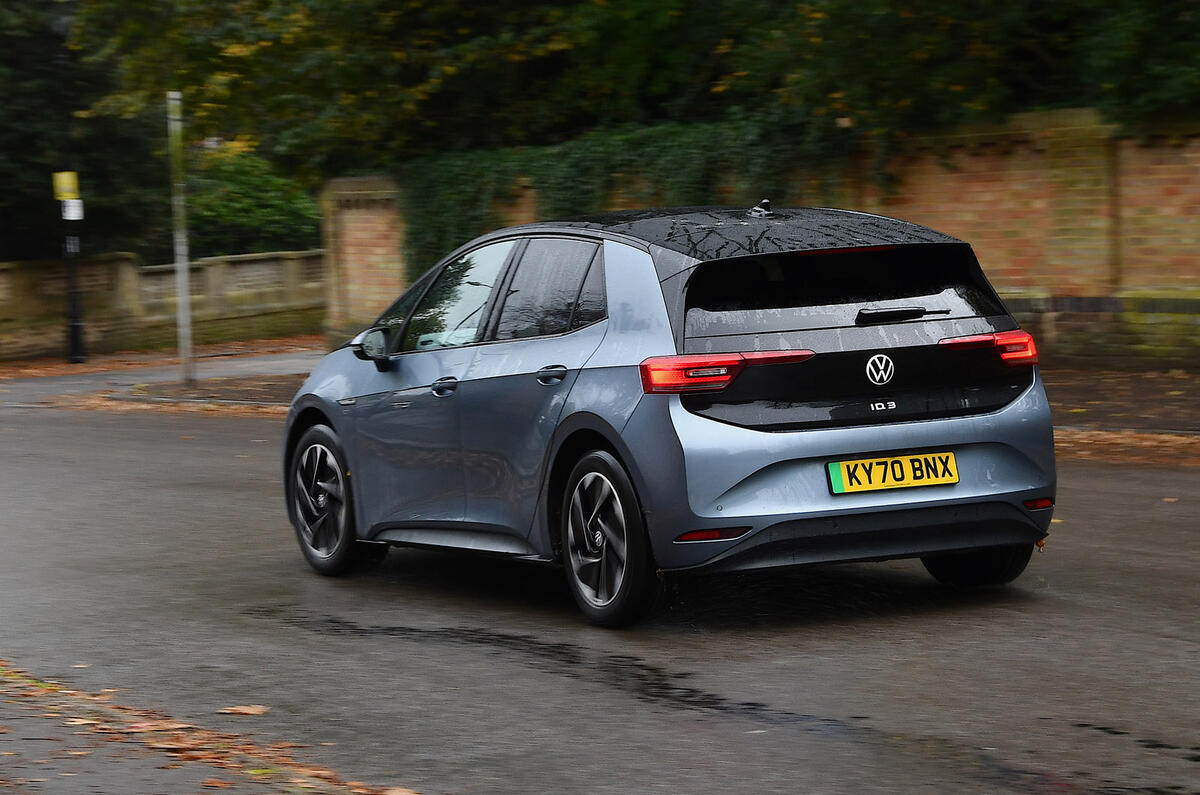
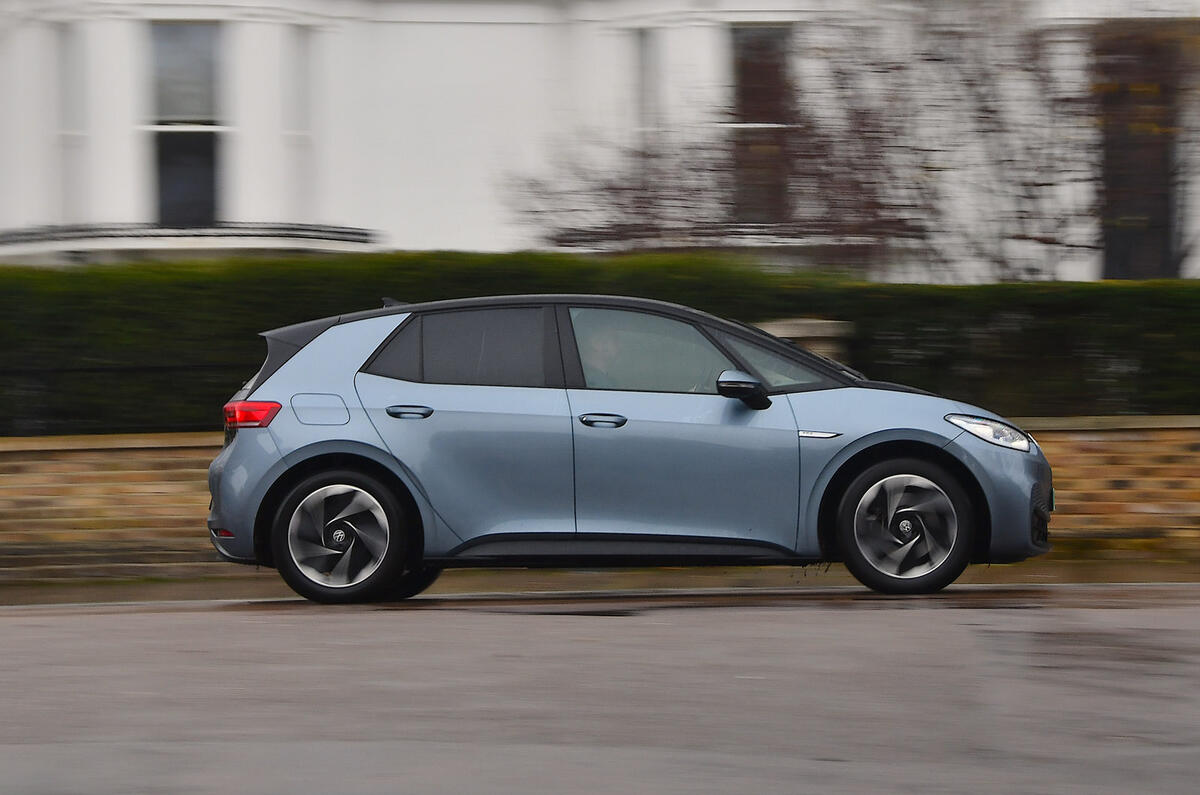
The Volkswagen ID.3 was VW's first purpose-built EV, positioned as the "electric Golf" — a mainstream, accessible electric hatchback. It's now well-established on the used market with reasonable prices.
Early ID.3s suffered from software problems, but subsequent updates resolved most issues. The car underneath is fundamentally sound — spacious, comfortable, and practical.
Model variants:
| Version | Battery | Range (WLTP) | DC Charging |
|---|---|---|---|
| Pure | 45kWh | 217 miles | 50kW |
| Pro | 58kWh | 264 miles | 120kW |
| Pro S | 77kWh | 341 miles | 170kW |
| GTX (2023) | 77kWh | 324 miles | 185kW |
Key changes:
| Year | Changes |
|---|---|
| 2020 | UK launch (1st Edition, Pro models) |
| 2021 | Pro S (77kWh) arrives, software updates |
| 2022 | Ongoing software refinement |
| 2023 | Facelift, GTX performance model |
The 2023 facelift addressed many criticisms (improved infotainment, better buttons), but this review focuses on pre-facelift cars (2020-2023).
Software: The elephant in the room
Early ID.3s had significant software problems — infotainment freezes, feature outages, and inconsistent behaviour. VW pushed multiple over-the-air updates to address these. Later cars (late 2021+) are much more stable.
Performance & Drive
In town
The ID.3 is excellent around town. The tight turning circle (10.2m despite its size), light steering, and good visibility make urban driving easy. The rear-wheel drive layout feels natural and nimble.
The single-speed transmission is smooth, and one-pedal driving (via "B" mode) works well.
On the motorway
Comfortable and refined at motorway speeds. Wind noise is well-controlled, and the ride smooths out imperfections nicely. The 77kWh Pro S version is best for regular motorway use — adequate range and faster 170kW charging.
| Feature | Availability |
|---|---|
| Adaptive cruise | Standard on most |
| Lane keeping | Standard |
| Travel Assist (L2) | Higher trims |
On a twisty road
The ID.3 is competent rather than exciting. The rear-wheel drive adds some engagement, and the low centre of gravity helps through corners. However, the steering is numb, and the suspension prioritises comfort over sharpness.
It's no Golf GTI replacement, but it's perfectly adequate for most drivers. The GTX (2023) adds more power but doesn't fundamentally transform the character.
Space & Practicality
Front seats
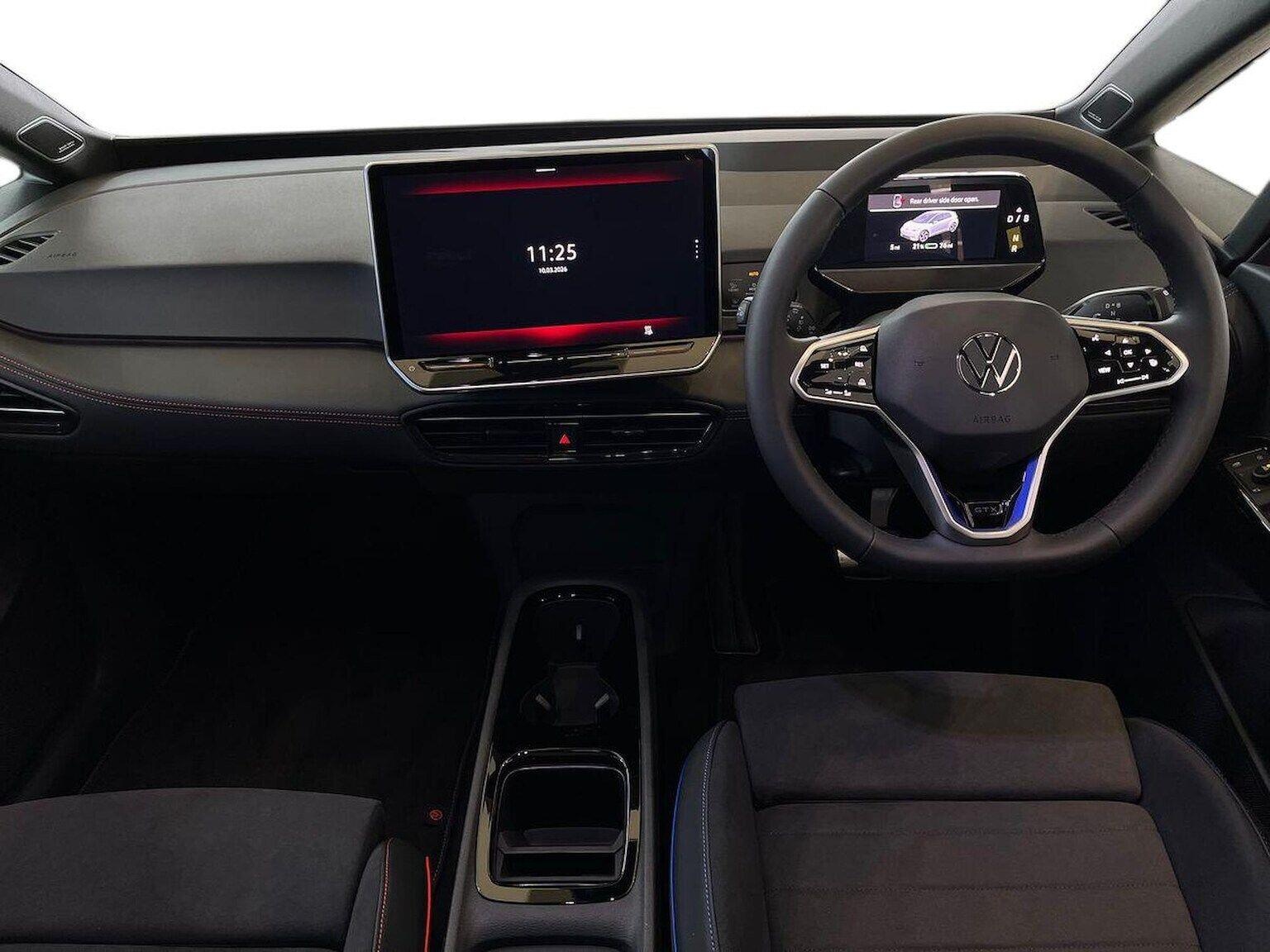
Front space is generous. The flat floor and compact dashboard create an airy, open feel. The seats are comfortable with good adjustment.
The dashboard design is minimalist — almost too much so. Important functions require touchscreen or touch-slider interaction.
Rear seats
Here's where the ID.3 impresses. Despite being similar in length to a Golf, the rear offers noticeably more space thanks to the purpose-built EV platform.
| Measurement | Space |
|---|---|
| Rear legroom | Excellent |
| Rear headroom | Good |
| Rear width | 3 adults possible |
The flat floor (no transmission tunnel) makes the centre seat more usable. It's genuinely a spacious family car.
Boot space
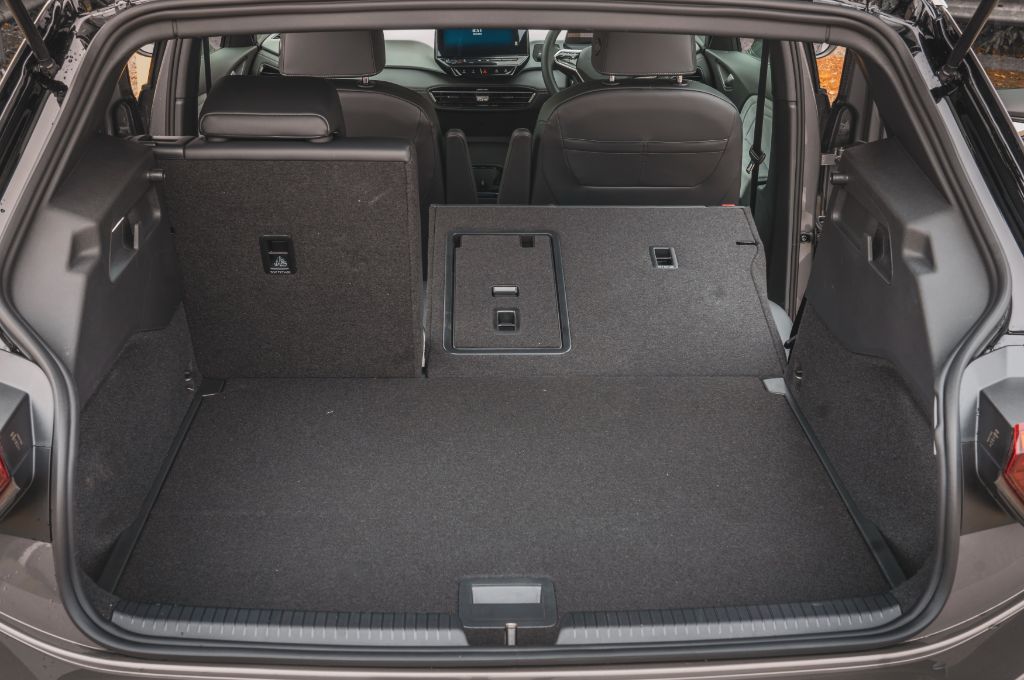
At 385 litres, the boot is adequate but not exceptional. The high floor (batteries underneath) limits depth. No frunk, so charging cables must fit in the boot.
| Configuration | Capacity |
|---|---|
| Seats up | 385 litres |
| Seats folded | ~1,267 litres |
The boot opening is practical, but this isn't an estate car. For serious load-carrying, consider the ID.4 SUV.
Interior & Tech
Interior quality
This is controversial. The ID.3's interior is "softer" than traditional VWs — more sustainable materials, simpler design. Some see this as modern; others see it as cheap.
The piano black trim scratches easily. Some plastics feel low-rent for VW. The touch-sensitive controls (headlights, climate sliders) frustrate many owners.
Infotainment
The 10" infotainment screen and 5.3" driver display were problematic at launch:
| Issue | Status |
|---|---|
| Freezing/crashing | Mostly fixed by updates |
| Slow response | Improved but not perfect |
| Missing features | Gradually added |
Apple CarPlay and Android Auto (wireless) are standard and recommended over the native system.
Equipment
| Feature | Availability |
|---|---|
| Heated seats | Standard (most) |
| Heated steering wheel | Higher trims |
| LED matrix lights | Higher trims |
| Augmented reality HUD | Higher trims |
| Wireless phone charging | Standard (most) |
The ID. Software 3.0 (2022+) brought significant improvements. Ask about software version when buying used.
Range & Charging
Real-world range
| Version | WLTP | Real-world (summer) | Real-world (winter) |
|---|---|---|---|
| Pure (45kWh) | 217 miles | 150-170 miles | 110-140 miles |
| Pro (58kWh) | 264 miles | 200-230 miles | 150-180 miles |
| Pro S (77kWh) | 341 miles | 260-290 miles | 200-240 miles |
The Pro S offers genuinely useful range. The Pro is fine for most UK use. The Pure (45kWh) is urban-only.
Home charging
| Battery | 7kW Charger | 11kW Charger |
|---|---|---|
| 58kWh Pro | ~9 hours | ~6 hours |
| 77kWh Pro S | ~12 hours | ~8 hours |
The 11kW onboard charger is standard on most UK cars.
DC rapid charging
| Version | Max Speed | 10-80% Time |
|---|---|---|
| Pure | 50kW | ~45 mins |
| Pro | 120kW | ~35 mins |
| Pro S | 170kW | ~35 mins |
The Pro S's 170kW charging is competitive. The Pro's 120kW is adequate. The Pure's 50kW limit is a significant restriction.
Charging curve
The ID.3 has a relatively flat charging curve, maintaining good speeds through most of the charge. It's more consistent than some rivals.
Reliability & Common Problems
Overall reliability
The ID.3 has had mixed reliability. Software issues dominated early ownership, though mechanical reliability is generally good.
Software problems (early cars)
| Issue | Status |
|---|---|
| Infotainment crashes | Fixed by updates |
| Phone key failures | Mostly resolved |
| Missing features at launch | Now complete |
| Over-the-air update failures | Improved |
Cars built from late 2021 onwards are generally more stable. Ask about software version and update history.
Mechanical issues
| Issue | Severity | Notes |
|---|---|---|
| 12V battery failure | Medium | Common across VW group |
| Suspension creaks | Low | Some reports |
| Interior rattles | Low | Quality varies |
| Braking system | Low | Occasional ABS sensor issues |
What's reliable
The MEB platform, electric motors, and batteries have proven robust. Major drivetrain failures are rare. Most problems relate to software and fit/finish.
Warranty
| Coverage | Duration |
|---|---|
| Vehicle | 3 years / 60,000 miles |
| Battery | 8 years / 100,000 miles |
VW's warranty is shorter than Kia/Hyundai. Check remaining coverage on used cars.
What to Look For When Buying
Before viewing
- Check build date — Late 2021+ preferred for better software
- Verify battery size — Pure, Pro, or Pro S significantly different
- Request software version — Ask about update history
- Check service history — VW dealer stamps preferred
During inspection
| Check | What to Look For |
|---|---|
| Infotainment | Responsiveness, no freezing |
| Touch controls | Climate slider, light controls work |
| Interior trim | Scratches on piano black |
| Panel gaps | Consistency |
| Charging port | Functions smoothly |
| All keys | Including phone key if applicable |
Test drive checklist
| Test | What You Want |
|---|---|
| Phone pairing | Bluetooth/CarPlay connects |
| Navigation | Route calculation works |
| Charging | Test DC charge if possible |
| Regen braking | B mode functions correctly |
| Assist systems | Travel Assist, lane keeping |
| Over-the-air status | Any pending updates |
Questions to ask
- What software version is installed?
- Has the car received all OTA updates?
- Any recurring infotainment issues?
- Has the 12V battery been replaced?
- Any warranty work completed?
Red flags
| Warning Sign | Risk |
|---|---|
| Very early build (spring 2020) | More software issues |
| Never updated | Potential problems |
| Infotainment crashes during test | Ongoing issues |
| Non-VW service history | May affect warranty |
Used Price Guide
Current market prices (2026)
| Year | Version | Mileage | Price Range |
|---|---|---|---|
| 2020 | Pro | 40-60,000 | £17,000 - £22,000 |
| 2021 | Pro | 30-50,000 | £19,000 - £25,000 |
| 2021 | Pro S | 30-50,000 | £24,000 - £30,000 |
| 2022 | Pro | 20-40,000 | £22,000 - £28,000 |
| 2022 | Pro S | 20-40,000 | £28,000 - £34,000 |
| 2023 | Pro S | 10-20,000 | £30,000 - £38,000 |
What affects price
| Factor | Impact |
|---|---|
| Battery size (Pro vs Pro S) | High |
| Build date/software version | Medium |
| Trim level | Medium |
| Mileage | Medium |
| Service history | Medium |
Best value
A late 2021 or 2022 Pro S with 20,000-40,000 miles offers the best balance. You get the 77kWh battery, better software, and 170kW charging for £28,000-£34,000.
Budget option
A 2020-2021 Pro (58kWh) with higher mileage can be had for under £20,000. Accept some software quirks but get a fundamentally good car.
Avoid
Very early 2020 cars with unknown update history. The software experience varies dramatically between early and late builds.
The Verdict
Who should buy a used Volkswagen ID.3?
The ID.3 makes sense if:
- You want a spacious, practical hatchback
- VW's dealer network appeals
- Rear passenger space matters
- You value comfort over sportiness
- You're buying a late 2021+ car
Who should look elsewhere?
Consider alternatives if:
- Interior quality and materials matter a lot
- You want physical buttons for key controls
- Efficiency is a priority (Tesla Model 3 is better)
- You're considering a very early build
- Reliability track record concerns you
The bottom line
The Volkswagen ID.3 (2020-2023) is a competent, spacious, and comfortable electric hatchback. It's not exciting, but it does the family car job well — more interior space than a Golf, reasonable range, and decent charging speeds.
The software issues that plagued early cars are largely resolved, but buyer beware: check the build date and update history. Late 2021+ cars are significantly better.
Interior quality and the touch-sensitive controls remain contentious. If these matter to you, test drive before committing.
For those wanting a mainstream, no-drama EV from a familiar brand, the ID.3 delivers. It's the sensible choice, even if it's not the exciting one.
| Rating | Score |
|---|---|
| Value for money | 7/10 |
| Real-world range | 8/10 (Pro S) / 7/10 (Pro) |
| Charging convenience | 8/10 |
| Reliability | 6/10 (early) / 7/10 (late) |
| Practicality | 8/10 |
| Overall | 7/10 |