
Overview
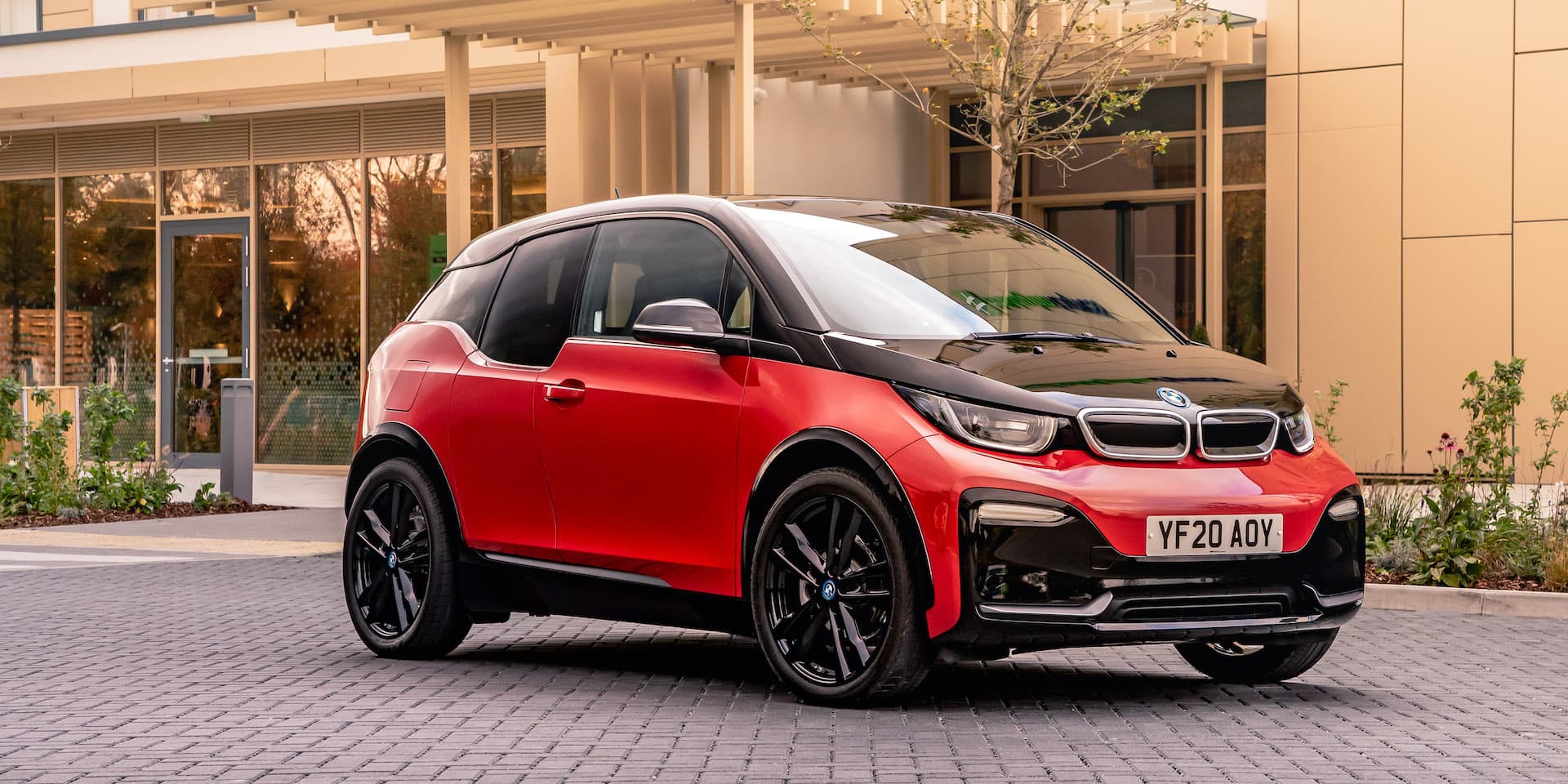
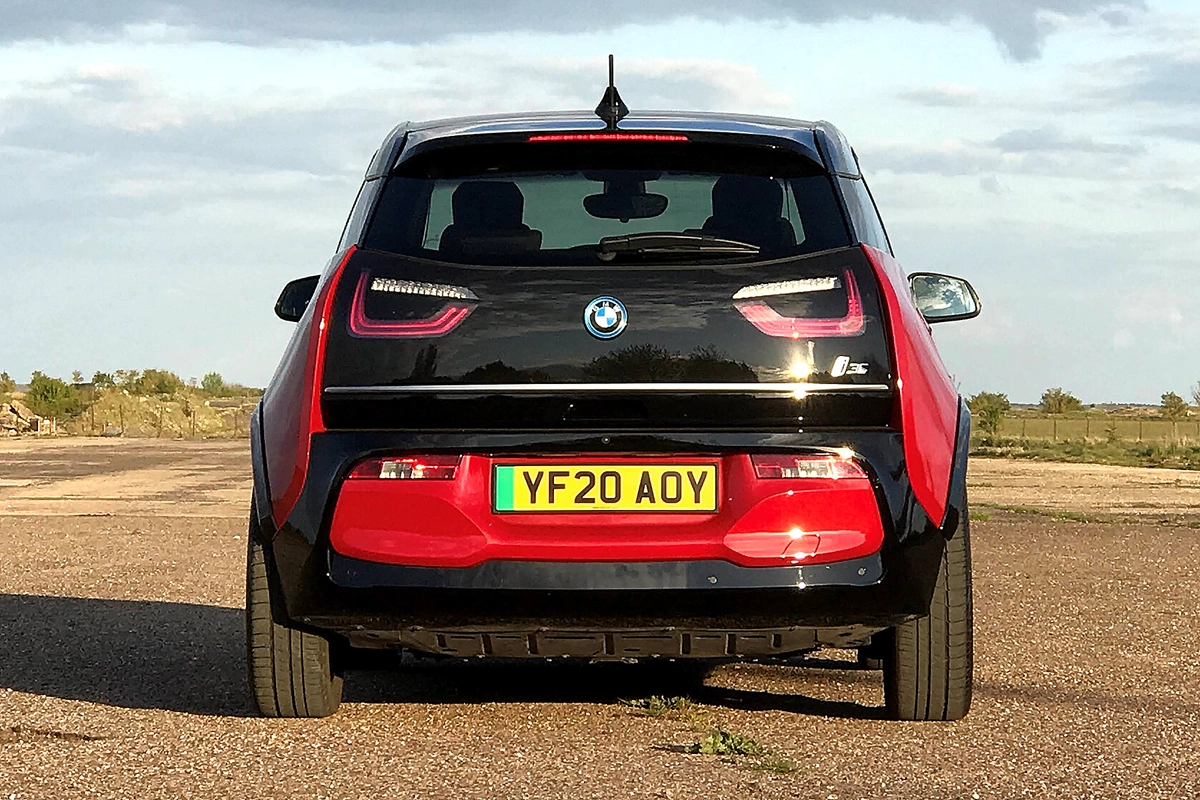
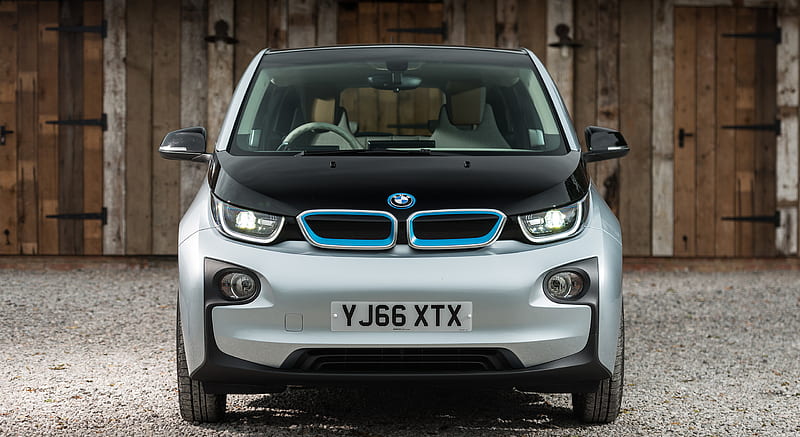
The BMW i3 was ahead of its time when it launched in 2013. By the 2017-2022 period covered here, it had matured into a distinctive urban EV with genuine premium appeal. As a used buy, it offers something no other electric car can: carbon fibre construction, BMW quality, and a design that still looks futuristic.
The i3 came in two battery variants during this period: the 94Ah (33kWh usable) from 2017-2018, and the 120Ah (42kWh usable) from 2019 onwards. There was also the i3s with sportier styling and slightly more power.
Key model years:
| Year | Changes |
|---|---|
| 2017 | 94Ah battery standard (was 60Ah) |
| 2018 | i3s sport variant introduced |
| 2019 | 120Ah battery (42kWh) across range |
| 2020 | Minor updates, new colours |
| 2022 | Production ended |
The i3's party trick is its construction. The passenger cell is made from carbon fibre reinforced plastic (CFRP), making it incredibly light and strong. The aluminium chassis keeps weight down further. This results in a car that feels agile and efficient despite modest battery capacity.
A Range Extender (REx) version with a small petrol generator was available on earlier models but phased out in the UK around 2018. For the used market, we recommend the pure electric version.
Performance & Drive
In town
The i3 is in its element in the city. The tight turning circle (under 10 metres) makes U-turns and parking effortless. The instant electric torque means you can zip through gaps in traffic with ease.
The tall, upright seating position gives excellent visibility, and the skinny eco-tyres reduce the footprint further.
| Driving Mode | Character |
|---|---|
| Comfort | Balanced, everyday driving |
| Eco Pro | Softer throttle, maximises range |
| Eco Pro+ | Limits top speed and climate for max range |
| Sport (i3s) | Sharper responses |
On the motorway
Motorway driving exposes the i3's limitations. Range drops noticeably at sustained high speeds, and the narrow tyres mean it can feel nervous in crosswinds. The cabin is quiet, but you'll be watching the range gauge carefully.
The 120Ah version makes motorway use more practical, but this is still fundamentally an urban car.
On a twisty road
This is where the i3 surprises. The low weight (1,270kg) and perfect 50:50 weight distribution make it genuinely engaging on twisty roads. The i3s version adds wider tyres and stiffer suspension for even sharper handling.
Body roll is minimal thanks to the rigid carbon fibre structure, and the regenerative braking can be set to maximum for one-pedal driving.
Space & Practicality
Front seats
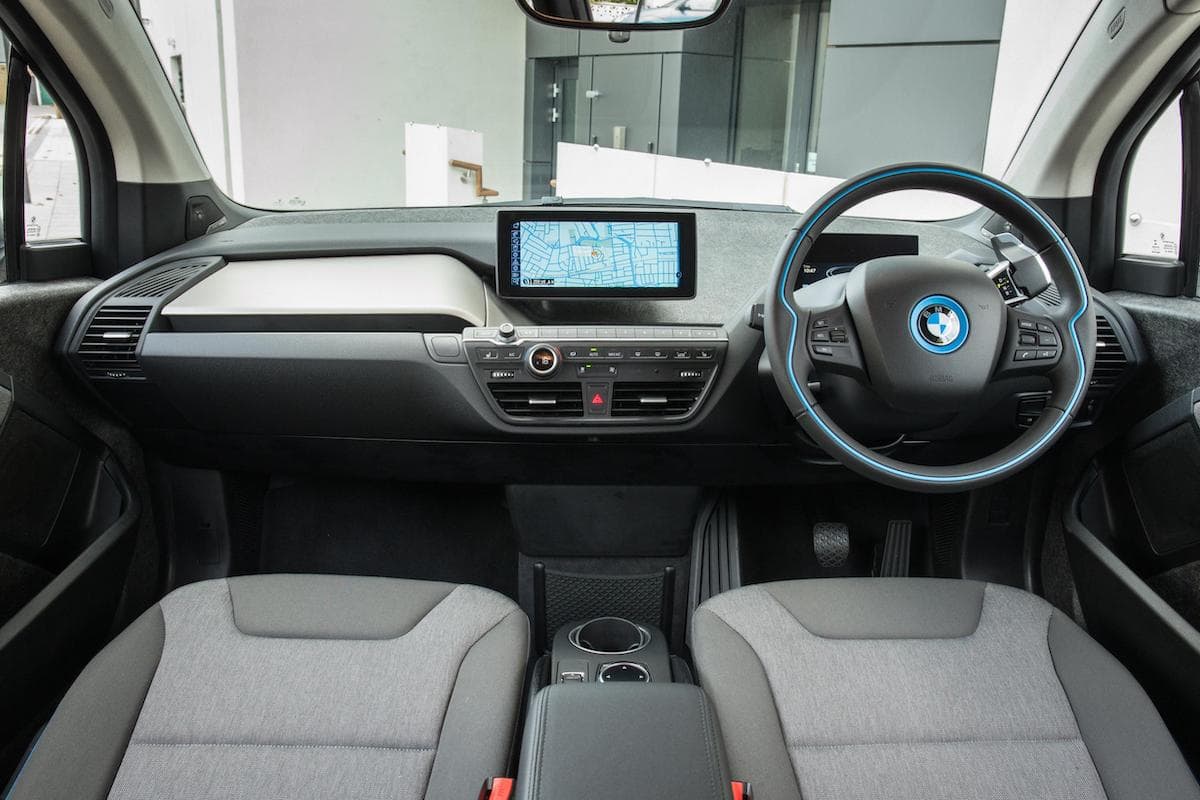
The front seats are excellent — supportive, comfortable, and with good adjustment range. The materials are sustainable (recycled plastics, natural fibres) but feel genuinely premium.
The dashboard is minimalist with a small digital instrument cluster and a central 10.25-inch screen. It's dated now but still functional.
Rear access and seats
Here's the i3's biggest compromise. The rear-hinged "coach" doors can only open when the front doors are open, making access awkward. It's fine for children but less dignified for adults.
Once inside, rear space is acceptable for two adults. The flat floor helps, though legroom is tight behind taller drivers.
| Measurement | Space |
|---|---|
| Rear legroom | Tight |
| Rear headroom | Good |
| Rear width | 2 adults only |
Boot space
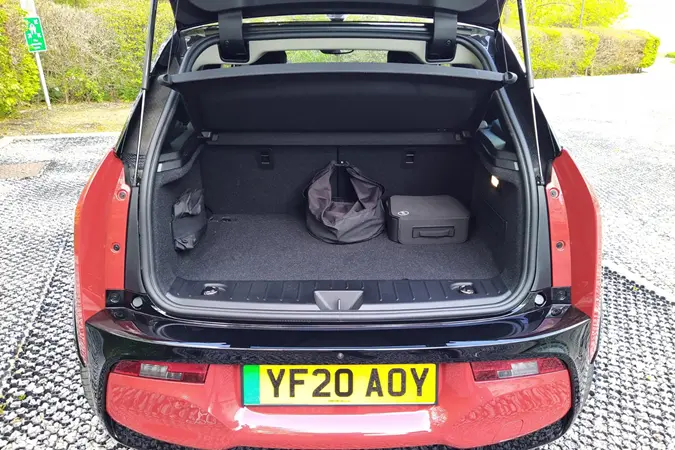
At 260 litres, the boot is small. The high floor (batteries underneath) limits depth. There's a small frunk (front trunk) for charging cables, which helps.
| Configuration | Capacity |
|---|---|
| Seats up | 260 litres |
| Seats folded | ~1,100 litres |
The rear seats fold 50:50 but the loading floor isn't flat. For families or those needing practicality, the i3 is a compromise.
Interior & Tech
Interior quality
This is where the i3 excels. Despite being designed over a decade ago, the interior still feels special. The use of sustainable materials — eucalyptus wood, natural wool, recycled plastics — creates a unique ambiance that conventional cars don't match.
Build quality is excellent, as you'd expect from BMW. Everything feels solid and well-assembled.
Infotainment
The iDrive system in i3s from this era uses the older rotary controller interface. It's intuitive once learned but lacks the slickness of modern touchscreen systems.
| Feature | Availability |
|---|---|
| Sat nav | Standard (Professional nav on higher trims) |
| Apple CarPlay | Standard from 2018 (no Android Auto) |
| DAB radio | Standard |
| Bluetooth | Standard |
| Wireless charging | Higher trims |
Driver assistance
BMW offered various driver assistance packages, though many were optional. Parking Assistant (automated parallel parking) is worth seeking out.
| Feature | Standard/Optional |
|---|---|
| Parking sensors | Standard |
| Reversing camera | Standard on most |
| Parking Assistant | Optional |
| Active cruise control | Optional |
Range & Charging
Real-world range
The i3's efficiency partially compensates for its smaller battery:
| Version | WLTP Range | Real-world (summer) | Real-world (winter) |
|---|---|---|---|
| 94Ah (33kWh) | 160 miles | 100-120 miles | 70-90 miles |
| 120Ah (42kWh) | 190 miles | 130-150 miles | 100-120 miles |
Efficiency is excellent — 4.0 to 4.5 miles per kWh is typical — thanks to the lightweight construction.
Home charging
The i3 has an 11kW onboard charger, faster than many rivals:
| Battery | 7kW Home Charger | 11kW Charger | 3-pin Plug |
|---|---|---|---|
| 94Ah | ~5 hours | ~3.5 hours | ~13 hours |
| 120Ah | ~6.5 hours | ~4.5 hours | ~17 hours |
Rapid charging
Crucially, the i3 uses CCS for rapid charging — unlike the Nissan Leaf's CHAdeMO. This means excellent charger compatibility going forward.
| Version | Max DC Speed | 20-80% Time |
|---|---|---|
| 94Ah | 50kW | ~25 minutes |
| 120Ah | 50kW | ~35 minutes |
The 50kW limit is modest by modern standards, but the small battery means absolute charging times are reasonable.
Reliability & Common Problems
Overall reliability
The i3 has proven reliable. The electric drivetrain is simple, and BMW's quality control is evident. Major failures are rare.
Battery health
Unlike the Leaf, the i3 has active thermal management (liquid cooling). This means battery degradation is typically slower and more predictable.
Most used i3s retain 85-95% battery health even with 50,000+ miles.
Common issues to check
| Issue | Severity | What to Look For |
|---|---|---|
| Range Extender faults | High | If REx version — check it starts and runs |
| 12V battery failure | Medium | Car won't wake up, electronics issues |
| Suspension noise | Low | Clunks over bumps |
| Interior rattles | Low | Check around dash trim |
| Brake discs | Low | Can corrode if not used (regenerative braking reduces usage) |
Tyres
The i3 uses unusual narrow tyres (155/70 R19) for efficiency. They're expensive (£150+ each) and only a few brands make them. Budget accordingly.
Carbon fibre considerations
The CFRP construction means crash repairs can be expensive. Check thoroughly for any accident damage — even minor impacts can require specialist repair.
What to Look For When Buying
Before viewing
- Check specification carefully — many features were optional
- Verify battery version — 94Ah vs 120Ah significantly affects range
- Request service history — BMW dealer stamps preferred
- Avoid Range Extender unless specifically wanted — adds complexity
During inspection
| Check | What to Look For |
|---|---|
| Body panels | Carbon fibre, check for cracks or repairs |
| Wheels | Kerb damage (expensive to repair) |
| Tyres | Unusual wear, adequate tread |
| Interior | Sustainable materials wear |
| Charging ports | Type 2 and CCS connectors |
| Coach doors | Hinges, catch operation |
Test drive checklist
| Test | What You Want |
|---|---|
| Cold start | Instant response |
| Steering feel | Light but precise |
| Regenerative braking | Smooth, adjustable |
| Ride quality | Firm but controlled |
| Range display | Realistic estimate |
| Coach door operation | Smooth, no sticking |
Questions to ask
- Is there remaining BMW warranty or extended cover?
- Have the brake discs been checked? (Low use = potential corrosion)
- When were tyres last replaced? (Expensive)
- Has the 12V battery been replaced?
- Any software updates outstanding?
Red flags
| Warning Sign | Risk |
|---|---|
| Accident damage history | Carbon fibre repairs are very expensive |
| Aftermarket wheels | May affect ride, efficiency |
| No service history | Unknown maintenance |
| Range Extender not running | Expensive repair |
| Interior damage | Sustainable materials hard to match |
Used Price Guide
Current market prices (2026)
| Year | Version | Mileage | Price Range |
|---|---|---|---|
| 2017 | 94Ah | 50,000+ | £11,000 - £14,000 |
| 2018 | 94Ah | 40-60,000 | £12,000 - £15,000 |
| 2018 | i3s 94Ah | 40-60,000 | £14,000 - £17,000 |
| 2019 | 120Ah | 30-50,000 | £16,000 - £20,000 |
| 2019 | i3s 120Ah | 30-50,000 | £18,000 - £22,000 |
| 2020 | 120Ah | 20-40,000 | £18,000 - £23,000 |
| 2021 | 120Ah | 10-30,000 | £21,000 - £26,000 |
| 2022 | 120Ah | Under 20,000 | £24,000 - £30,000 |
What affects price
| Factor | Impact |
|---|---|
| Battery version (94Ah vs 120Ah) | High |
| i3 vs i3s | Medium |
| Specification level | Medium |
| Mileage | Medium |
| Colour (special editions) | Low-Medium |
| Service history | Medium |
Best value
A 2019 120Ah with 30,000-50,000 miles and good specification offers the best balance. Expect £16,000-£20,000 for a well-maintained example with BMW service history.
Avoid
High-mileage 94Ah models with no service history. The limited range and unknown maintenance status make these poor value.
The Verdict
Who should buy a used BMW i3?
The i3 makes sense if:
- You want something genuinely different and premium
- Urban/suburban use is primary — limited longer journeys
- You appreciate sustainable materials and thoughtful design
- You can live with coach doors and limited rear access
- Build quality and residual values matter to you
Who should look elsewhere?
Consider alternatives if:
- You need practical family space
- Regular long-distance travel is required
- Rear seat access for adults is important
- Budget is a primary concern (other used EVs offer more range for less)
The bottom line
The BMW i3 (2017-2022) is unlike anything else on the used market. Its carbon fibre construction, premium interior, and distinctive design make it feel special in a way conventional EVs don't. The 120Ah version offers just-about-acceptable range for mixed use.
Its limitations — small boot, awkward rear access, modest range — are the trade-off for its unique character. If those compromises don't affect your usage, the i3 offers a genuinely premium, sustainable EV experience at used prices that make it remarkable value.
For urban use, it remains one of the most enjoyable EVs ever made.
| Rating | Score |
|---|---|
| Value for money | 7/10 |
| Real-world range | 5/10 (94Ah) / 7/10 (120Ah) |
| Charging convenience | 8/10 |
| Reliability | 8/10 |
| Practicality | 5/10 |
| Overall | 7/10 |