
Overview
The Hyundai Kona Electric was one of the first affordable EVs to offer genuinely usable range. When it launched in 2018, the 64kWh version's 300-mile WLTP range was remarkable, and it remains competitive today.
As a used buy, the Kona Electric offers proven reliability and excellent efficiency in a practical crossover body. It's one of the more sensible used EV choices.
Model variants:
| Battery | Range (WLTP) | Motor | 0-62mph |
|---|---|---|---|
| 39kWh | 189 miles | 134hp | 9.9s |
| 64kWh | 301 miles | 204hp | 7.6s |
Key model changes:
| Year | Changes |
|---|---|
| 2018 | Launch in UK (64kWh first) |
| 2019 | 39kWh version arrives |
| 2020 | Minor updates, improved infotainment |
| 2021 | Facelift: new design, improved charging |
| 2023 | Replaced by all-new Kona Electric |
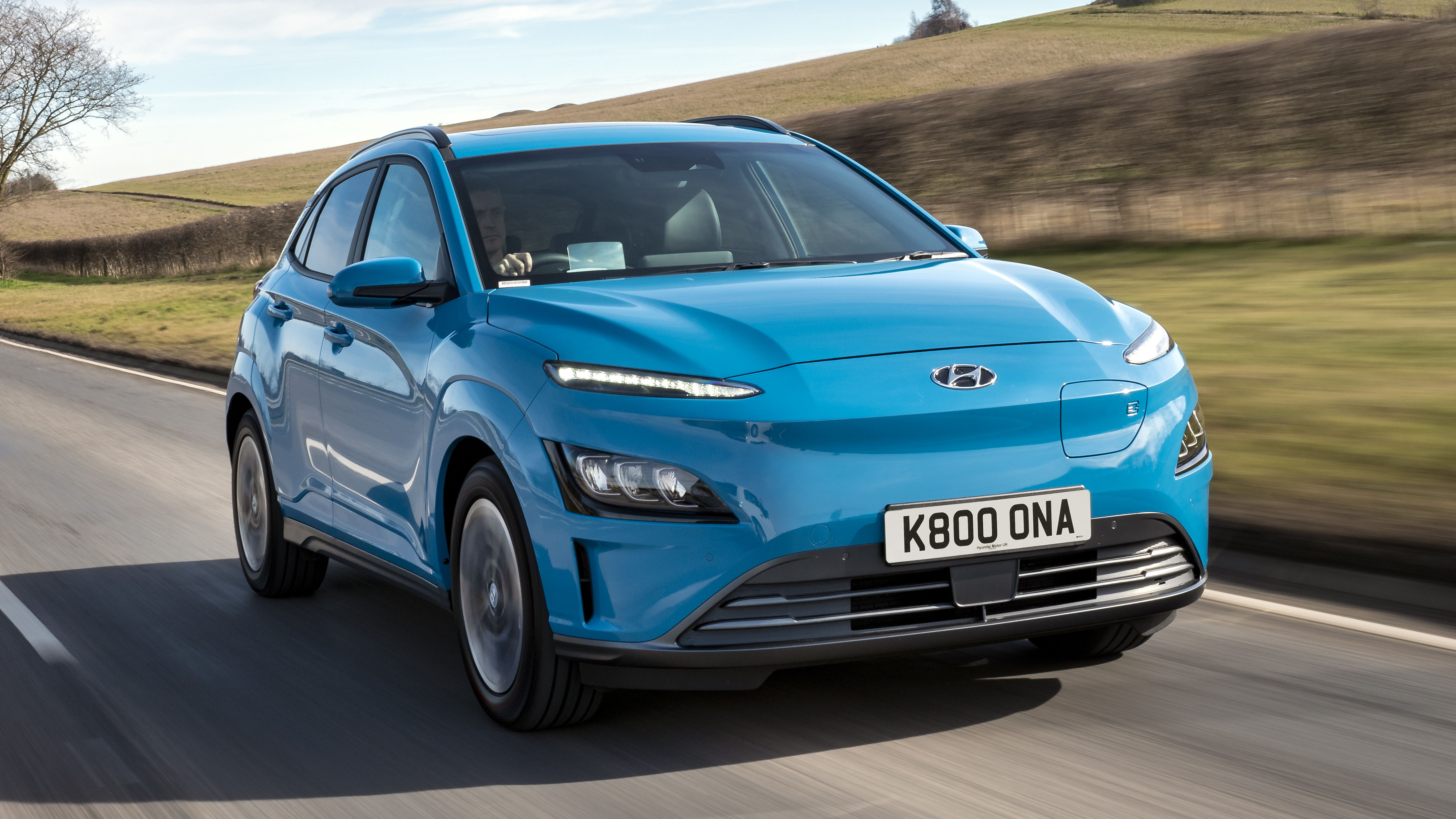
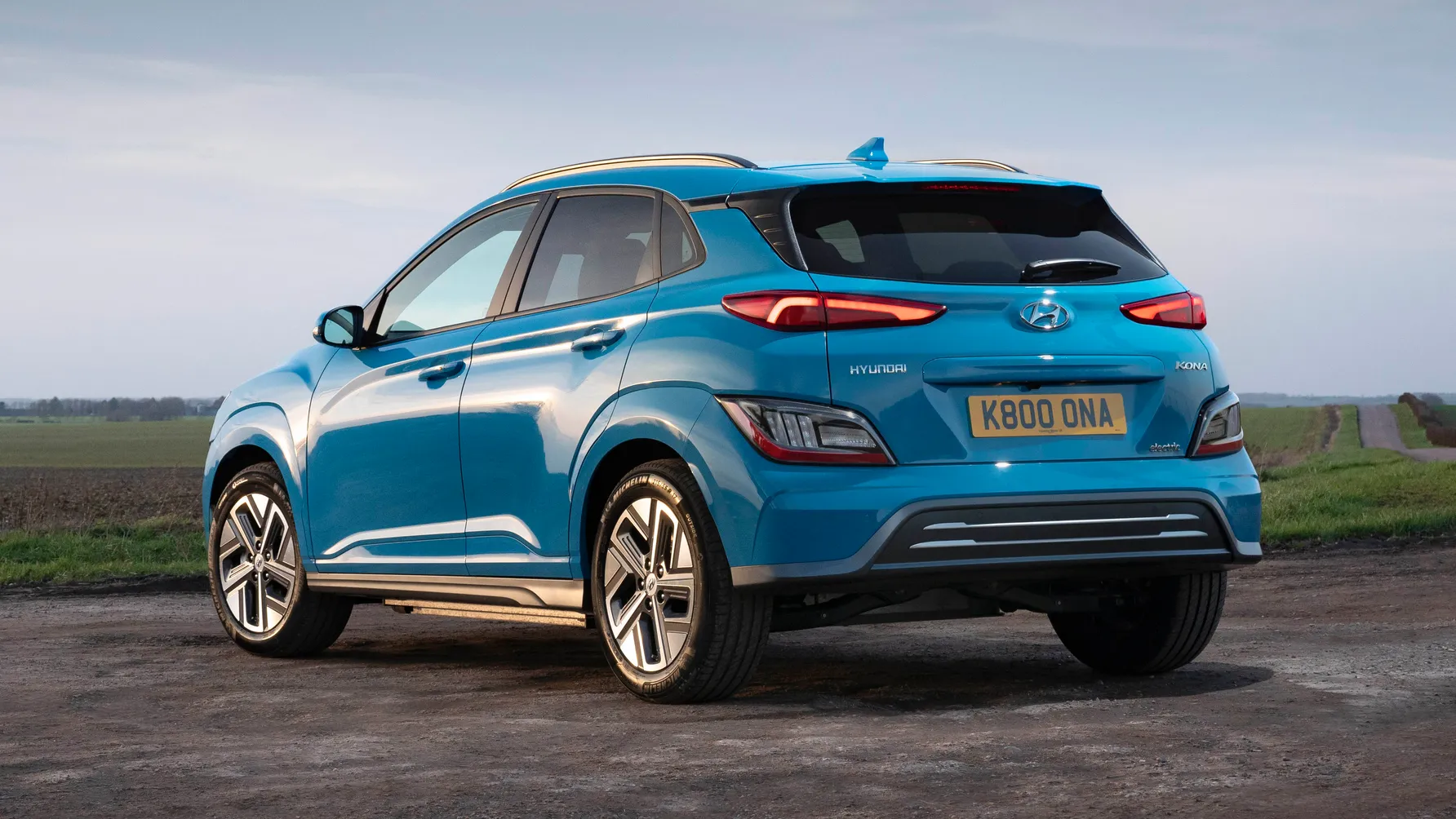
The 2021 facelift brought significant improvements: new exterior design, faster 11kW AC charging (previously 7.2kW), improved DC charging, and updated interior tech. These facelifted models command a premium but are worth seeking out.
Which to buy?
The 64kWh version is the clear choice for most buyers. The extra range and power make it much more versatile, and residual values are stronger. The 39kWh suits urban-only users on a budget.
Performance & Drive
In town
The Kona Electric's compact dimensions make it ideal for urban use. At 4.18m long, it's similar to a Ford Focus, making parking and manoeuvring straightforward.
The instant torque makes pulling away from lights effortless, and the elevated driving position gives good visibility. Regenerative braking is adjustable via paddles behind the steering wheel — a nice feature that many owners love.
On the motorway
The Kona Electric handles motorway driving well. It's refined enough for longer journeys, though wind noise becomes noticeable above 70mph. The 64kWh version's range makes motorway trips practical without constant charging stops.
| Feature | Notes |
|---|---|
| Adaptive cruise | Standard on Premium trims |
| Lane keeping | Standard on most |
| Stability | Good, planted feel |
On a twisty road
It's not sporty, but the Kona Electric is competent and predictable. The low battery placement keeps the centre of gravity manageable, and the steering is accurate if a bit numb.
The 64kWh version's 204hp provides adequate performance for overtakes. The 39kWh's 134hp is sufficient but less spirited.
Space & Practicality
Front seats
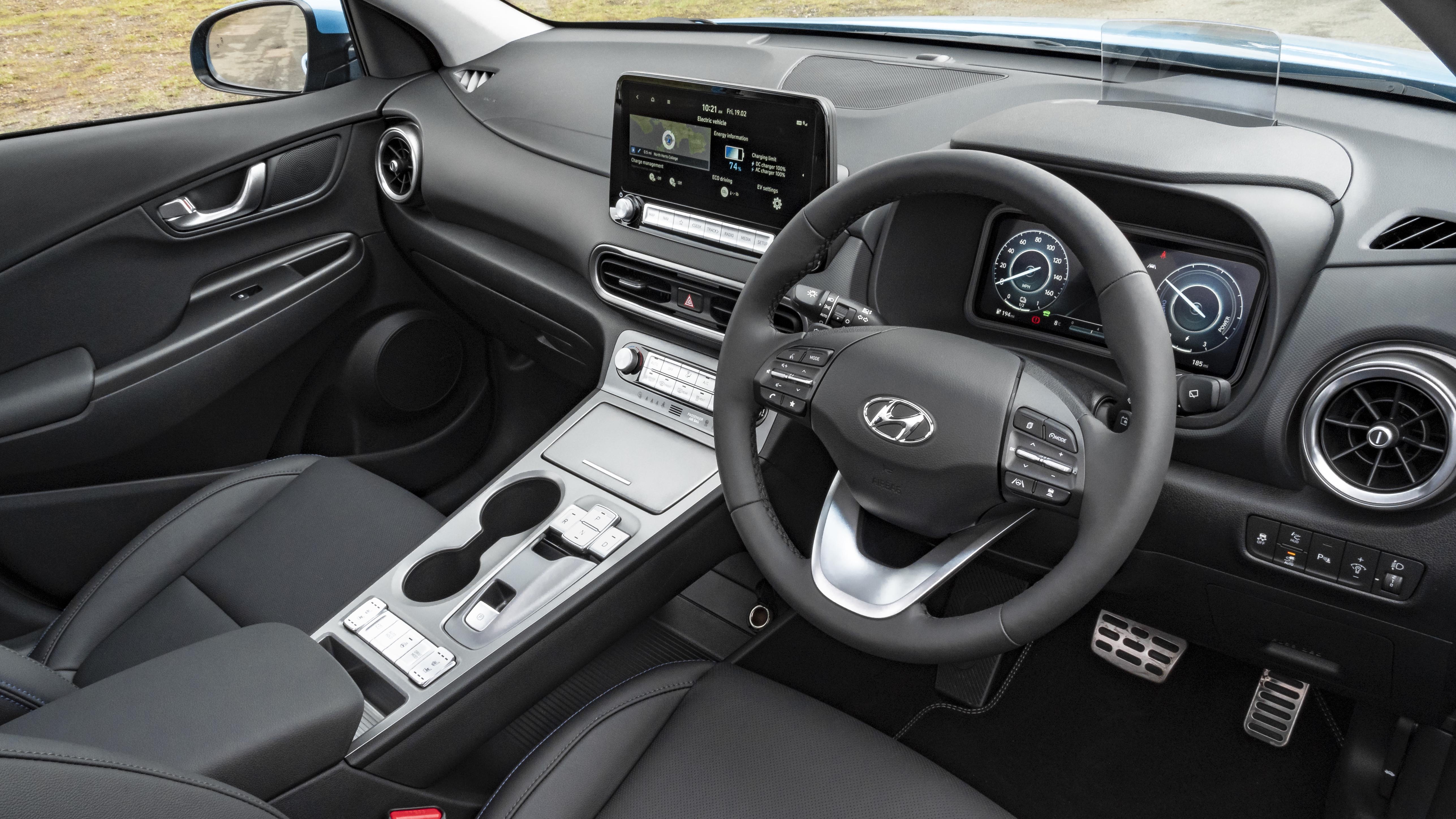
The front seats are comfortable with good adjustment range. The driving position is elevated (it's a crossover) but not excessively high. Interior quality is good for the price, with a logical dashboard layout.
Rear seats
This is the Kona Electric's weakness. Rear legroom is tight, and taller passengers will find it cramped. It's fine for children or shorter adults, but not ideal for regular adult passengers.
| Measurement | Space |
|---|---|
| Rear legroom | Tight |
| Rear headroom | Adequate |
| Rear width | 2 adults (3 cramped) |
ISOFIX points are standard, and child seats fit, though access isn't the easiest.
Boot space
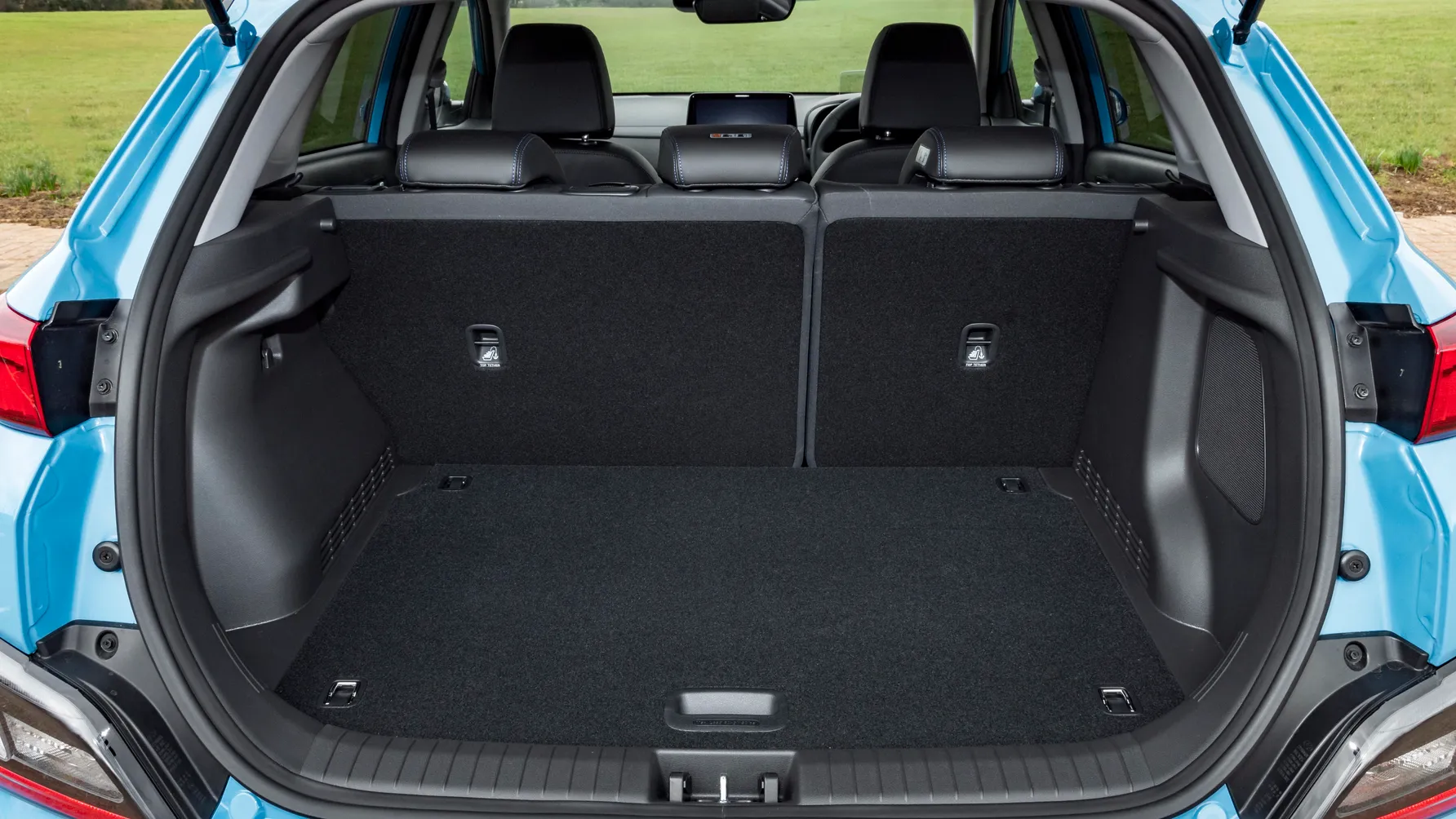
At 332 litres, the boot is modest for an SUV — similar to a supermini. The floor is high due to the batteries, and there's no frunk. Rear seats fold 60:40 but not completely flat.
| Configuration | Capacity |
|---|---|
| Seats up | 332 litres |
| Seats folded | ~1,114 litres |
If you need serious cargo space, the Kona Electric may disappoint. It's fine for weekly shopping but limited for family holidays with luggage.
Interior & Tech
Interior quality
Interior quality is good for a mainstream brand. Materials are durable if not luxurious, and the build quality is solid. The design is conventional and ages well.
The facelifted 2021+ models have an improved interior with a larger screen and more modern feel.
Infotainment
| Model Year | Screen Size | Features |
|---|---|---|
| 2018-2020 | 8" | Basic navigation, Apple CarPlay/Android Auto |
| 2021+ | 10.25" | Improved nav, better graphics |
Apple CarPlay and Android Auto are standard, which is essential given the somewhat dated native system on early cars.
Equipment
| Feature | Standard/Trim |
|---|---|
| Heated seats | Most trims |
| Heated steering wheel | Premium trims |
| Adaptive cruise | Premium/Ultimate |
| Blind spot monitoring | Premium/Ultimate |
| Wireless phone charging | Ultimate |
Higher trims (Premium, Ultimate) offer excellent value for the equipment included.
Range & Charging
Real-world range
The Kona Electric is one of the most efficient EVs on the road:
| Version | WLTP | Real-world (summer) | Real-world (winter) |
|---|---|---|---|
| 39kWh | 189 miles | 140-160 miles | 100-130 miles |
| 64kWh | 301 miles | 240-270 miles | 180-220 miles |
The 64kWh regularly achieves 4+ miles per kWh in mixed driving, making it genuinely efficient. The range figures are realistic, unlike some competitors.
Home charging
| Battery | Version | 7kW Charger | 3-pin Plug |
|---|---|---|---|
| 39kWh | All | ~6 hours | ~14 hours |
| 64kWh | Pre-facelift | ~10 hours | ~24 hours |
| 64kWh | Facelift (11kW) | ~6.5 hours | ~24 hours |
The facelift's upgrade to 11kW onboard charging is a significant improvement. Pre-facelift 64kWh models are limited to 7.2kW.
DC rapid charging
| Version | Max Speed | 10-80% Time |
|---|---|---|
| 39kWh | 44kW | ~55 mins |
| 64kWh pre-facelift | 77kW | ~55 mins |
| 64kWh facelift | 100kW | ~45 mins |
DC charging is adequate but not class-leading. The facelift improvement to 100kW helps, but it's still slower than Hyundai Ioniq 5 or similar platforms.
Reliability & Common Problems
Overall reliability
The Kona Electric has a good reliability record. Hyundai's 5-year/unlimited mileage warranty (8 years on battery) provides peace of mind, and major failures are uncommon.
Battery recall
Some 2018-2020 Kona Electrics were affected by a battery recall (fire risk). Hyundai replaced affected batteries. Always verify whether the recall has been completed on any used purchase — check with Hyundai directly using the VIN.
| Issue | Status |
|---|---|
| Battery recall | Check completion |
| Software updates | Over-the-air available |
| Battery replacements | Upgraded cells fitted |
Common issues
| Issue | Severity | Notes |
|---|---|---|
| 12V battery drain | Medium | Can fail, easy to replace |
| Infotainment glitches | Low | Software updates help |
| Heat pump issues | Low | Some cold weather complaints |
| Seat comfort | Low | Some find seats firm |
What's reliable
The drivetrain is simple and robust. The motor and main battery are well-proven across millions of Hyundai/Kia EVs. Most issues are minor electrical gremlins rather than major failures.
What to Look For When Buying
Before viewing
- Verify battery recall status — Contact Hyundai with VIN
- Check service history — Hyundai dealer stamps preferred
- Identify model year — Facelift (2021+) is significantly improved
- Confirm battery size — 39kWh vs 64kWh affects range dramatically
During inspection
| Check | What to Look For |
|---|---|
| Service stamps | Regular dealer servicing |
| Battery health | Check range estimate at 100% |
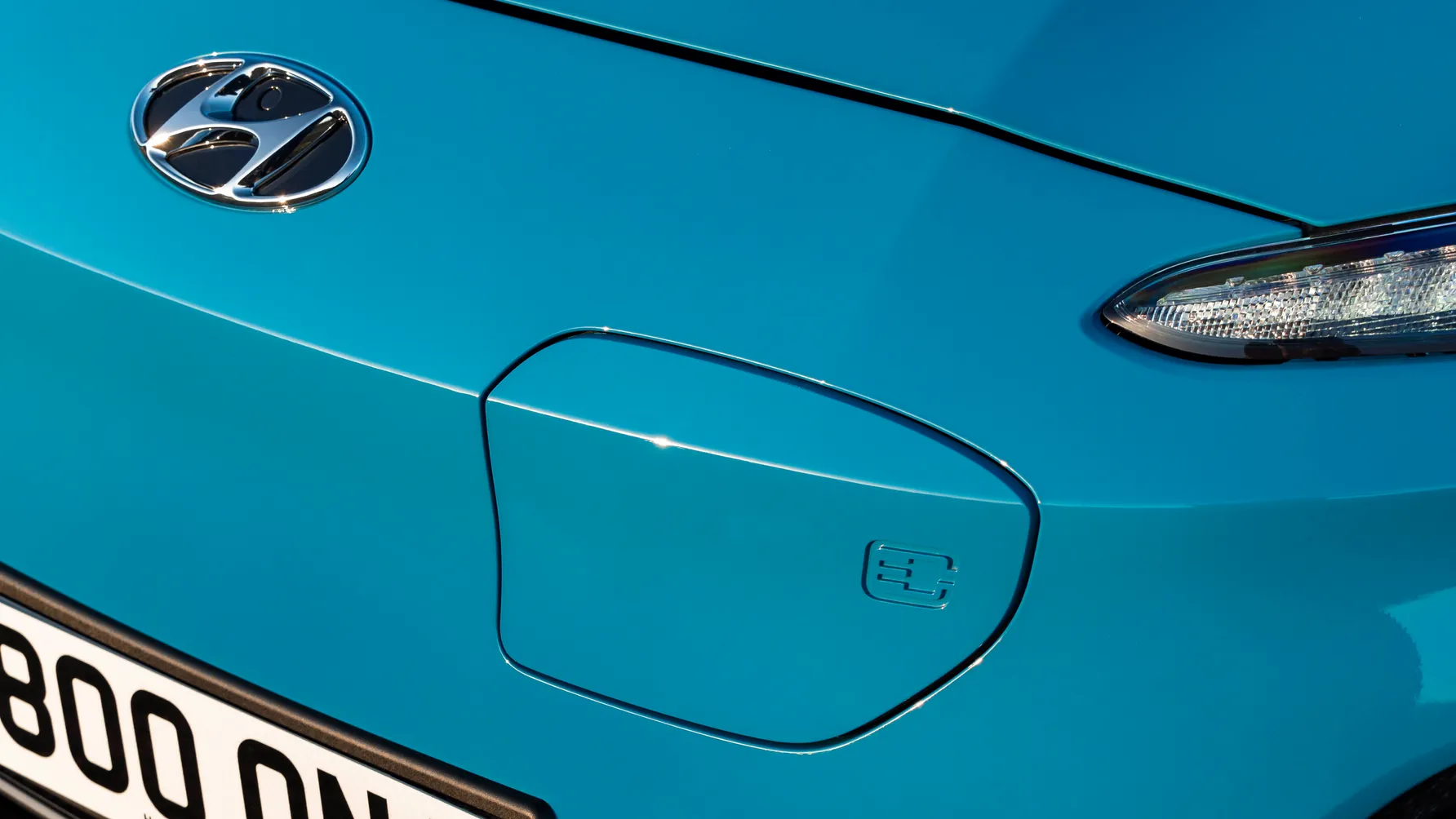
| Charging port | Type 2 and CCS both function |
| Interior wear | Seats, steering wheel condition |
| Paintwork | Stone chips on front common |
| Tyres | Even wear, adequate tread |
Test drive checklist
| Test | What You Want |
|---|---|
| Regen paddles | All levels work smoothly |
| DC charging | Try a rapid charge if possible |
| Climate control | Heat pump functions (winter) |
| Infotainment | No freezing or lag |
| Range estimate | Reasonable for battery size |
| All assist features | Adaptive cruise, lane keep |
Questions to ask
- Has the battery recall been completed? (Critical)
- Has the 12V battery been replaced?
- Any infotainment issues or updates done?
- What's the typical range you achieve?
- Has it been rapid charged frequently?
Red flags
| Warning Sign | Risk |
|---|---|
| Battery recall not completed | Do not buy until done |
| Missing service history | Unknown maintenance |
| Very high mileage + rapid charging | Battery wear concerns |
| Crash repair evidence | Check carefully |
Used Price Guide
Current market prices (2026)
| Year | Version | Mileage | Price Range |
|---|---|---|---|
| 2018 | 64kWh | 50,000+ | £15,000 - £19,000 |
| 2019 | 39kWh | 40-60,000 | £13,000 - £17,000 |
| 2019 | 64kWh | 40-60,000 | £17,000 - £22,000 |
| 2020 | 64kWh | 30-50,000 | £19,000 - £25,000 |
| 2021 | 64kWh Facelift | 20-40,000 | £24,000 - £30,000 |
| 2022 | 64kWh Facelift | 10-30,000 | £27,000 - £33,000 |
What affects price
| Factor | Impact |
|---|---|
| Battery size (39 vs 64kWh) | High |
| Facelift (2021+) | High |
| Trim level | Medium |
| Mileage | Medium |
| Service history | Medium |
Best value
A 2020 64kWh Premium with 30,000-50,000 miles offers excellent value. You get the full range, good equipment, and proven reliability for £19,000-£25,000. Ensure battery recall is completed.
For budget buyers, a 2019 64kWh with higher mileage (50,000+) at £17,000-£20,000 is good value if service history is clean.
Worth the premium?
The 2021+ facelift models with faster charging and improved interior are worth the extra if budget allows. The difference in day-to-day usability is noticeable.
The Verdict
Who should buy a used Hyundai Kona Electric?
The Kona Electric makes sense if:
- You want proven range and efficiency
- Compact crossover size suits your needs
- Rear seat space isn't critical
- You value reliability and warranty coverage
- Budget is a consideration
Who should look elsewhere?
Consider alternatives if:
- You need regular adult rear passengers
- Boot space is important (families)
- Fast DC charging matters
- You want the latest tech and styling
- You need more interior space (consider Ioniq 5)
The bottom line
The Hyundai Kona Electric (2018-2023) is one of the most sensible used EV purchases available. It offers excellent real-world range, proven reliability, and efficient running costs in a practical crossover body.
Its limitations — tight rear seats, modest boot, slower charging than newer rivals — are balanced by its genuine usability and strong warranty coverage. The 64kWh version is the clear choice for most buyers.
The facelift (2021+) is worth the premium for improved charging and interior, but pre-facelift models remain excellent value. Just ensure the battery recall has been completed on any 2018-2020 car.
For an affordable, practical, and reliable used EV, the Kona Electric is hard to fault.
| Rating | Score |
|---|---|
| Value for money | 8/10 |
| Real-world range | 8/10 (64kWh) / 6/10 (39kWh) |
| Charging convenience | 7/10 |
| Reliability | 8/10 |
| Practicality | 6/10 |
| Overall | 7/10 |