EV Charger Reviews

The UK's Top Home EV Chargers For 2026

A closer look into the leading domestic models. Expert analysis of features, performance, and real-world experience.

Hypervolt Home 3 Pro Device

Hypervolt Home 3 Pro

93/100
Price: From £588 before VAT
Dimensions:
328 mm (H) x 243mm (W) x 101mm (D)
5.2 kg
Solar Compatibility:
Tethered:
Untethered:
Best For: Reliability and customer service
Company HQ: LondonUK Flag
Founded: 2018

What it's good at

Hypervolt Home 3 Pro strikes a strong balance between design, performance and practicality. Its hardware feels well built with a premium finish that even non-car-nerds notice on the wall. Installation typically goes smoothly and the unit is a 7.4kW single-phase charger (the UK domestic norm), which makes it a good "future-proof" choice mainly in software and features rather than higher three-phase power. The app is generally well regarded too; it's responsive, intuitive, and gives a straightforward view of charging history and scheduling. Many reviewers and owners appreciate the over-the-air updates and the sense that the product continues to improve after the sale.

Where it falls short

It isn't perfect. The smart features — while solid — aren't as nuanced as those on Ohme or Zappi when it comes to tariff optimisation and solar diversion; Hypervolt's focus has been on simplicity over configurability. If you want very granular control over power sources or tariff slicing, you might feel a little boxed in. Some users have also noted inconsistencies with firmware updates, where a new release improves one area but introduces quirks in another, requiring a bit of patience with support. Lastly, at its price point, it's not the bargain that some cheaper units represent. You're paying for build quality and brand cachet more than radical technical superiority.

Who it's for

A strong all-rounder that will satisfy most households, particularly if you like the look of a well-finished charger and want reliability without a steep learning curve. It's not the best for power users who want every smart feature under the sun, but it's a seriously nice piece of kit for everyday UK charging.

myenergi Zappi (v2) Device

myenergi Zappi (v2)

92/100
Price: From £509 before VAT
Dimensions:
439 mm (H) x 282mm (W) x 122mm (D)
5.5 kg
Solar Compatibility:
Tethered:
Untethered:
Best For: Solar PV enthusiasts
Company HQ: StallingboroughUK Flag
Founded: 2016

What it's good at

Zappi v2 is the default answer if you have solar and want to "drive on sunshine". It can take power from the grid, your PV, or a mix of both, and its three modes – ECO, ECO+ and FAST – let you choose between maximum self-consumption and simple fast charging. The charger constantly monitors your household load via CT clamps and adjusts in real time so it only uses surplus where that's what you've asked it to do. Multiple independent reviewers praise it as one of the most capable and mature solar-aware chargers available, with support not just for solar but also small-scale wind and even micro-hydro systems. The hardware is robust and properly engineered: UK-designed and built, weather-hardy, and offered in tethered or untethered versions. The unit has full controls on the front, so you can operate it entirely without the app if you want. User satisfaction is generally high – in What Car's home-charger survey MyEnergi scored over 90% satisfaction, with most criticism focused on price rather than function. The app has improved over time; recent reviews describe it as one of the better experiences in terms of clarity and control over energy flows.

Where it falls short

It's not cheap. For a standard install it tends to come in noticeably above basic smart chargers, and if you want the full PV integration with multiple CT clamps, Harvi units, etc., the cost and complexity creep up further. If you don't have solar today and aren't seriously planning it, you're effectively paying for features you won't use. In that case, cheaper smart-tariff-focused units (like Ohme or Wallbox) can be better value. Physically, it's chunky. Nobody buys a Zappi for its looks; a couple of reviews explicitly say if aesthetics matter to you, Zappi probably isn't the one, recommending Hypervolt or Easee instead. The UI on the charger itself is functional rather than elegant – lots of information, a bit "industrial" – which some people like and others find old-fashioned. There have been isolated grumbles about firmware quirks and a steep learning curve: with multiple modes, CT configurations and linked devices, it is easier to misconfigure than a very simple point-and-shoot charger. But once set up correctly, long-term reliability feedback is generally very positive.

Who it's for

If you already have solar PV (or plan to) and you care about squeezing every last kWh of self-generated energy into the car, Zappi v2 is very hard to beat. It's a workhorse: not pretty, not the cheapest, but technically sophisticated and built with exactly that use case in mind. If you're on a straightforward grid-only setup and just want the cheapest smart box that follows a time-of-use tariff, you're over-buying here.

Ohme Home Pro Device

Ohme Home Pro

89/100
Price: From £518 before VAT
Dimensions:
170 mm (H) x 200mm (W) x 100mm (D)
4kg
Solar Compatibility:
Tethered:
Untethered:
Best For: All-round functionality
Company HQ: LondonUK Flag
Founded: 2017

What it's good at

Ohme Home Pro is probably the best "cheap-tariff exploiter" on the UK market right now. Its entire design is built around smart tariff integration – particularly Octopus – rather than solar diversion or pretty looks. It can pull your exact tariff, schedule charging into the cheapest windows automatically, and even let you set a max price per kWh (where supported) so it refuses to charge when the grid is expensive. The hardware is compact, neat and fairly discreet, with a built-in screen, 7.4kW output, IP55 rating and integrated 3G/4G SIM (included free for three years). Reviews from installers and resellers consistently praise the software as the real product: dynamic smart charging, deep Octopus integration and decent reporting. Customer service, at least in recent years, looks strong: Trustpilot is packed with comments about the company's effectiveness in providing remote diagnosis and rapid firmware fixes.

Where it falls short

The clever bits all depend on cloud services and car integrations. When those behave, it's brilliant; when they don't, the experience drops sharply. It's important to remember that partnerships are subject to change; disappointingly, OVO's Charge Anytime tariff has been dropped from the selection. Some of the more technically literate owners have complained about flaky API connections to certain cars, meaning the smart features that sold them the product sometimes fall over and leave the unit acting like a dumb charger until Ohme fix things at their end. You can expect to pay more for the SIM after your initial three-year grace period is up. It's also not a solar charger in the way Zappi is. Ohme now has solar charging modes, but it's still not a fine-grained, "chase every spare watt" diversion setup in the Zappi sense, and the behaviour depends more on Ohme's platform than a fully local control loop. Finally, the absence of Wi-Fi is a seriously glaring omission for such a high-end system. If you live in an area with poor 4G network coverage, it might be worth looking elsewhere.

Who it's for

If you're on, or planning to move to, an EV-friendly time-of-use tariff (especially Octopus) and don't care about solar diversion or designer looks, Ohme Home Pro makes sense. It's essentially a front-end to cheap electricity. The downside is that you're heavily tied into their cloud and reliant on your car's API behaving; if you want something that will just carry on doing its clever tricks entirely locally, this isn't it.

Zaptec Go 2 Device

Zaptec Go 2

88/100
Price: From £617 before VAT
Dimensions:
239 mm (H) x 178mm (W) x 73mm (D)
1.6 kg
Solar Compatibility:
Tethered:
Untethered:
Best For: Future-proof V2G functionality
Company HQ: StavangerNorway Flag
Founded: 2012

What it's good at

Zaptec Go 2 is the popular Norwegian contender that's been making inroads in the UK thanks to its sleek looks, compact build and certain forward-thinking features, including bidirectional V2G (Vehicle-to-Grid) readiness. Its hardware is robust and sensible, with a focus on delivering steady, uninterrupted charging tailored to what your house supply can handle. The app ecosystem and backend are generally stable and clear to use, with decent scheduling, usage history and remote control. It also has respectable load-balancing features, which matter if you share electrics with other heavy users or have a modest supply capacity.

Where it falls short

Despite its sophistication, much of the app and feature set still feel a notch behind the best of breed in terms of tariff optimisation, solar integration or really clever charging profiles — it's reliable but not especially tariff- or solar-obsessed. Some owners find the app less polished than rivals, and the charger's UI can feel a bit button-lite if you're the sort who likes direct, at-the-device control. Installation feedback is mixed; a few engineers report the unit's accessory ecosystem isn't as extensive or straightforward as, say, Wallbox or Ohme, meaning you sometimes end up dongling parts together.

Who it's for

At EVHelper UK we are great fans of Zaptec's 'untethered-by-default' design approach, as it allows for neat handling and caters to drivers who need to park their vehicle a bit further away from the front of the building. The company doesn't believe in overloading users with a touchscreen in addition to the app, when the app is largely enough on its own. It's a thoughtfully designed system. If you want a no-nonsense charger that works well day in, day out and doesn't require you to become an energy management expert, it's a sensible pick. Hard chargers might look elsewhere for more advanced features, but for straightforward home use it does exactly what it should without drama.

Wallbox Pulsar Max Device

Wallbox Pulsar Max

87/100
Price: From £367 before VAT
Dimensions:
198 mm (H) x 201mm (W) x 99mm (D)
1.3 kg
Solar Compatibility:
Tethered:
Untethered:
Best For: Smart features on a budget
Company HQ: BarcelonaSpain Flag
Founded: 2015

What it's good at

Wallbox Pulsar Max marks an evolution of the Pulsar line with a nice balance of smarts, size, and ease of use. The unit feels solid and compact on the wall, with a good app that handles scheduling, share-of-load settings, and basic reporting without buried menus. It's especially strong around dynamic load management — if you're sharing a house supply with ovens, storage heaters or EVs, it does a very respectable job of keeping things stable. The choice of tethers and finishes makes it a decent fit for most modern homes, and Wallbox's firmware updates over the air mean you don't feel like you're stuck with the software you initially bought.

Where it falls short

The headline gripe from plenty of owners is that while the app is functional, it's not especially intuitive compared to market leaders like Ohme or MyEnergi. There's a sense that Wallbox is chasing feature parity rather than defining it, so while you get scheduling and basic smart controls, tariff and solar features tend to be more dependent on add-ons (such as a power meter) and setup than some higher-rated units. Another downside is the occasional firmware quirk; some early batches have had reports of the unit taking a day or two to settle into stable operation after a software update. Most of these get resolved with subsequent patches, but it leaves a slightly "unfinished" feel compared to rivals whose software feels more polished from day one. Customer support is generally competent but receives mixed marks on responsiveness.

Who it's for

Pulsar Max is a solid, everyday choice if you want a compact, capable smart charger and aren't obsessed with squeezing every last penny off your electricity bill or rescuing surplus solar. It's reliable, will do everything most drivers need, and won't cause frequent headaches; it's just not the most exciting or refined option in the segment.

Indra Smart LUX Device

Indra Smart LUX

85/100
Price: From £550 before VAT
Dimensions:
306 mm (H) x 201mm (W) x 78mm (D)
3.6 kg
Solar Compatibility:
Tethered:
Untethered:
Best For: Confined parking spaces
Company HQ: MalvernUK Flag
Founded: 2013

What it's good at

Indra Smart LUX is one of those chargers that punches a bit above its weight on features for the price. It comes with a full suite of smart functions — scheduling, power share, basic energy reporting and app control — at a price point that's often below the market average for smart units. The hardware is unpretentious but solid, and it tends to get good marks from installers for being straightforward to set up with few surprises. The app has a clean layout and covers the essentials without burying them. Users appreciate that Indra doesn't try to upsell every feature behind a paywall or subscription; what you see in the box is largely what you get in the app.

Where it falls short

If you're coming from something like Ohme or Zappi, the shortcomings become clearer. The smart features are more basic — tariff optimisation is less flexible (though it supports Intelligent Octopus Go), and solar integration is less nuanced than the best. The app, while clean, can feel a bit "bare bones" if you're used to fractal layers of detail and rich visualisation of usage data. Firmware updates arrive, but not with the frequency or fanfare of bigger brands, and when they do land they occasionally shuffle menus rather than deliver discernible new functionality. Hardware quality is perfectly serviceable, but it's not as refined as the likes of Hypervolt or Wallbox. Some users note that the physical finish feels a bit cheaper, and over time the plastics show wear more readily than higher-end units.

Who it's for

Indra Smart LUX is a pragmatic choice if you want a capable smart charger without overpaying for high-end bells and whistles. It will do the job day to day, and for many households that's enough. But if you want top-tier app polish, advanced grid and solar features, or really clever tariff logic, you'll find it a bit underwhelming.

Andersen Quartz Device

Andersen Quartz

83/100
Price: From £580 before VAT
Dimensions:
172 mm (H) x 286mm (W) x 110mm (D)
3.4 kg
Solar Compatibility:
Tethered:
Untethered:
Best For: Compact style and colour selection
Company HQ: StewartbyUK Flag
Founded: 2015

What it's good at

The Andersen Quartz is undeniably well-designed. It stands out on your wall with a minimalist, modern aesthetic that genuinely feels like it was created with a designer's eye rather than just an engineer's. Installation is generally straightforward, and the app interface is clean and uncluttered — which matters if you just want something that works without a steep learning curve. Andersen also supports useful smart features: scheduling, power sharing, and basic tariff insights, which are enough for many households who don't need deep energy-management wizardry.

Where it falls short

Good looks and simplicity come at the cost of depth in functionality. The Quartz's smart features, while present, feel a level down from class leaders such as Ohme and MyEnergi. It supports tariff-aware charging and solar compatibility, but if you want to manage charging around cheap electricity or surplus PV with maximum granularity, you may still find it less compelling than the category leaders. The app can feel a little too pared back; it does the basics well, but if you like charts and fine-grained control you'll get frustrated. Performance reviewers also point out that Andersen's firmware updates can feel sporadic and sometimes deliver only incremental tweaks, not meaningful enhancements. Support is adequate, but in a few cases users report delayed responses or a sense that knowledge is patchy on less common queries.

Who it's for

If you like your tech to be tidy and unobtrusive, and you don't care about the geekier side of smart charging, Andersen Quartz delivers a reliable, stylish everyday experience. It's well built and easy to live with, but for buyers who want cutting edge optimisation or maximum solar self-consumption it's not going to be their first choice.

Easee One Device

Easee One

83/100
Price: From £529 before VAT
Dimensions:
256 mm (H) x 193mm (W) x 106mm (D)
1.5 kg
Solar Compatibility:
Tethered:
Untethered:
Best For: Compactness and discreet style
Company HQ: StavangerNorway Flag
Founded: 2018

What it's good at

Easee One carved out a niche early on with a compact, modern design and a solid set of standard features. It supports three-phase power for faster charging where available, and the unit can be tailored to a range of installation setups. There's load management and basic scheduling in the app, and overall it's a charger that tries to be as unobtrusive and straightforward as possible. The hardware is neat and the product usually looks fine on the wall; there have been no complaints from installers about tricky wiring or odd quirks in the physical unit.

Where it falls short

If this feels slightly lukewarm, it's because Easee One doesn't quite excel at anything. Its smart features are competent but unremarkable: the app works, but it's not especially intuitive or rich in data; tariff logic is rudimentary; and there's no strong solar-aware charging. For the price point you can find more compelling value in rivals like Ohme, which offer real energy management advantages rather than just basic scheduling. It also carries reputational baggage from the Swedish regulator's action against Easee (and the long-running dispute that followed), which cooled buyer confidence even though many units work fine day to day. There have also been software complaints from multiple owners — slow app updates, occasional connection dropouts between the unit and phone, and a sense that firmware fixes arrive slower than with more active brands. Functionally it gets you from A to B, but it won't raise many eyebrows.

Who it's for

Easee One is fine if you want a clean, no-fuss charger with a decent reputation and you're not hung up on maximum savings or solar performance. But in a crowded market where many competitors offer richer featuresets at similar prices, it feels just a bit too plain for its rating.

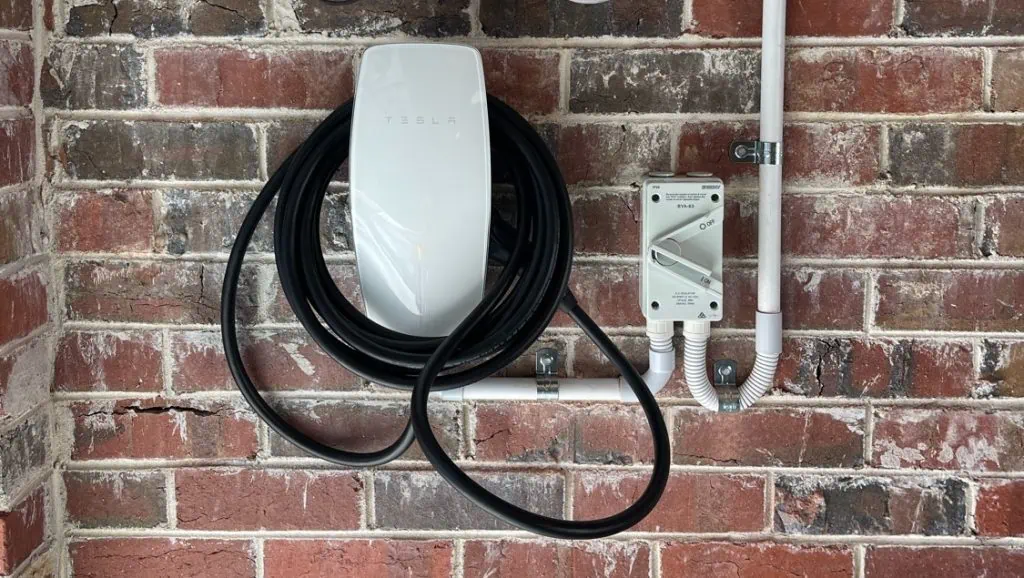
Tesla Wall Connector (Gen 3) Device

Tesla Wall Connector (Gen 3)

82/100
Price: From £375 before VAT
Dimensions:
345 mm (H) x 155mm (W) x 110mm (D)
6.8 kg
Solar Compatibility:
Tethered:
Untethered:
Best For: Tesla owners wanting simplicity
Company HQ: AustinUSA Flag
Founded: 2003

What it's good at

Tesla's Gen-3 Wall Connector is a solid, no-nonsense charger that caters particularly well to Tesla owners — and it shows. Build quality is good and it's obviously been engineered with electric cars in mind rather than as an afterthought. The unit works with the Tesla app for Tesla and non-Tesla vehicles, and the charger will reliably deliver strong power right up to the grid or home-supply limit.

Where it falls short

Outside the Tesla bubble, things get less rosy. Unlike many rivals, the Wall Connector's smart feature set is minimal — there's no real tariff optimisation, no solar awareness, and the app controls don't show deep consumption data or scheduling flexibility. It's a solid mechanical charger with some remote on/off features, but it doesn't compete with properly smart boxes from Ohme, MyEnergi, or Wallbox if you want to manage costs or integrate with home energy systems. Another predictable drawback is that while it's reliable and simple, it's not designed as a full home-energy management hub in the way some rivals are. Installer feedback also flags that because Tesla expects a bit more performance knowledge on the electrical side, some installs require a bit more hands-on expertise rather than being a set-and-forget job.

Who it's for

If you drive a Tesla and care about simplicity and reliability over bells and whistles, the Gen-3 Wall Connector does the job admirably. If you're looking for advanced smart features, detailed energy analysis, tariff optimisation, or serious solar integration, you'll find it wanting compared to rivals that put energy management front-and-centre.

EO Mini Pro 3 Device

EO Mini Pro 3

81/100
Price: From £380 before VAT
Dimensions:
215 mm (H) x 140mm (W) x 100mm (D)
3.0 kg
Solar Compatibility:
Tethered:
Untethered:
Best For: Compactness and excellent value
Company HQ: LondonUK Flag
Founded: 2014

What it's good at

The EO Mini Pro 3 is a compact, sensible charger that ticks many of the boxes for everyday home charging. It's small and unobtrusive on the wall, doesn't try to be more than it is, and does the essential job of delivering a dependable charge without fuss. The EO/ev.energy app provides the basics: schedule your charging windows, see how much electricity you've used, and turn charging on or off remotely. For many households that's all you really need. Installer feedback tends to be positive; there are no unusual quirks that make it tricky to fit or commission.

Where it falls short

You really notice what's missing when you compare it to others in the segment. The Mini Pro 3's smart features are fairly basic: tariff optimisation and solar features are less capable than the best, and the app experience can feel functional rather than thoughtful, especially during service transitions. Technically it gets the job done, but it doesn't give you much in the way of energy management intelligence. The build quality and finish are okay, but reviewers and owners note it doesn't feel particularly premium. The app gets the job done, but it's not as polished or informative as better offerings from Ohme or MyEnergi. While the unit's simplicity might be a virtue for some, for those who like granularity it quickly feels like a compromise.

Who it's for

This is a good basic smart charger if you want straightforward, reliable charging without spending on the latest bells and whistles. It will work fine for most typical EV owners who just want to set a schedule and forget it. But if you care about squeezing the most value out of tariffs or integrating with home-energy systems, you'll find it lacking compared to higher-rated rivals.

evec VEC01/03 Device

evec VEC01/03

80/100
Price: From £250 before VAT
Dimensions:
VEC01: 300 mm (H) x 190mm (W) x 126mm (D)
1.8 kg
VEC03: 320 mm (H) x 193mm (W) x 105mm (D)
5kg
Solar Compatibility:
Tethered:
Untethered:
Best For: Essential features on a budget
Company HQ: SalfordUK Flag
Founded: 2021

What it's good at

The evec VEC series — typically the VEC01 and VEC03 models — is interesting because it represents one of the more budget-friendly entries into the "smart charger" category that still feels like a real product, not just cheap hardware. The units cover the basics: scheduling, remote control, usage tracking (and, depending on model/setup, features such as OCPP and load balancing). They're simple to install and operate, and for households where you just want a functional smart charger without paying for high-end features you may never use, they fill a niche. Installer feedback also tends to highlight that evec devices are straightforward to commission, with few surprises or odd technical hurdles.

Where it falls short

What you don't get here is depth. The smart features are rudimentary compared to the best on the market — tariff and solar features tend to be less mature than the category leaders, and the app is basic both in UI polish and in data presentation. For owners who like visibility into their charging costs or want to play with detailed energy profiles, evec's offerings quickly feel too shallow. Build quality is fine for standard use, but it doesn't feel as refined as something from Hypervolt or Wallbox. The app experience is similarly plain, and firmware updates are less frequent and less impactful than with more active brands.

Who it's for

evec's VEC models are a pragmatic choice if your main goal is a working smart charger that does the basics at a competitive price. They won't win awards for feature richness or interface enjoyment, but they're credible, dependable units for straightforward home charging without spending extra on features you won't use.